This Healing Chicken Soup Recipe Cures Everything (Including Bad Days)
You’ll build this “cures-everything” chicken soup on collagen-rich bones, slow-simmered with onion, garlic, carrots, and celery to extract gelatin, glycine, minerals, and antioxidants that support immunity, joint health, and gut integrity. High-quality chicken provides complete protein to stabilize blood sugar and appetite, while herbs, lemon, and mineral salt enhance absorption and electrolyte balance. Gentle heat protects amino acids and aromatics, making this ideal after illness, travel, or tough workouts—and that’s just the start of what it can do.
What you will leave with
- Warm, collagen-rich bone-in chicken broth hydrates, thins mucus, and provides amino acids like cysteine, glycine, and gelatin for recovery and joint support.
- Aromatics—onion, garlic, and leek—plus carrots, celery, and herbs like thyme and parsley modulate immunity, reduce inflammation, and deliver antioxidants, vitamins, and minerals.
- Slow, gentle simmering with apple cider vinegar extracts minerals, preserves clarity and flavor, and maximizes the broth’s soothing, easily digestible nutrition.
- Serving with lemon, mineral-rich salt, and whole peppercorns sharpens flavor, enhances vitamin C absorption, and supports electrolyte balance after stress, travel, or training.
- Familiar aromas, warm steam, and balanced protein-rich, low-glycemic ingredients promote nervous system calm, emotional comfort, and stable energy on tough or gloomy days.
Why This Chicken Soup Feels Like Instant Comfort
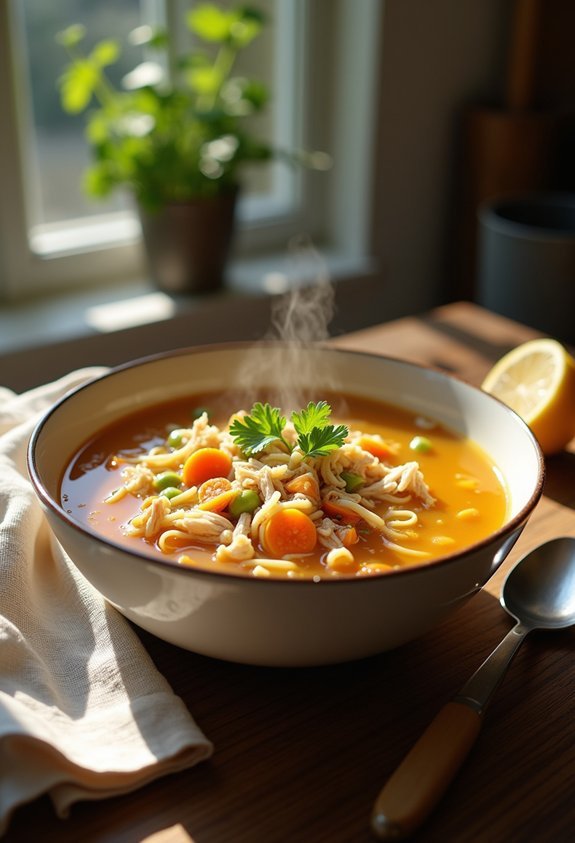
Although it’s often described as “comfort food,” chicken soup’s calming effect has measurable physiological roots: warm broth supports hydration and mucus thinning; cooked chicken provides complete protein and amino acids like cysteine that may help reduce inflammation; and vegetables such as carrots, celery, onion, and garlic add electrolytes, vitamin A, vitamin C, and antioxidant compounds that support immune function.
Beyond that, you feel something subtler: your breathing slows, shoulders drop, and your nervous system reads the steam as safety, not threat. Repetitive motions—lifting the spoon, swallowing slowly—anchor you in the present moment.
Familiar aromas cue warm nostalgia and cozy memories, engaging brain regions linked with attachment. You don’t just recall being cared for; you physiologically re-enter that state. Your body trusts this ritualized care.
The Healing Ingredients That Make All the Difference
While the broth feels soothing on its own, the specific ingredients you choose determine how healing your chicken soup actually is.
You start with bone-in chicken for collagen, glycine, and minerals that support joint health and gut integrity. Then you layer aromatics: onion, garlic, and leek provide sulfur compounds and prebiotic fibers that modulate immunity and reduce inflammation.
Carrots and celery add beta-carotene, vitamin C, and polyphenols that act as gentle immune boosters. You tuck in healing herbs—parsley, thyme, and bay—because they deliver antioxidants and mild antimicrobial effects.
A squeeze of lemon enhances vitamin C absorption and brightens flavor, while a small amount of salt sharpens taste, helping you rehydrate when you’re depleted. Together, these choices make your bowl feel precise, purposeful nourishment tonight.
Tools and Pantry Staples You’ll Need
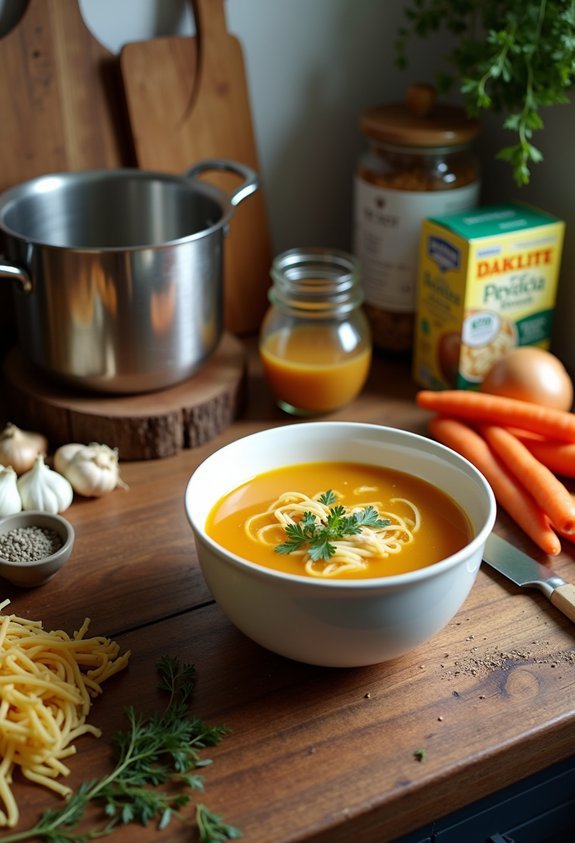
Because the right setup makes the process smoother and safer, you’ll want a few reliable tools and core pantry staples before you start simmering.
Think of this as quietly setting the stage for your body to repair itself.
1. Heavy-bottomed stockpot:
Promotes even heating, minimizing scorching and preserving delicate phytonutrients from herbs and vegetables.
2. Fine-mesh strainer and ladle:
Let you skim proteins and excess fat, yielding a clearer broth that’s easier on digestion.
3. Cutting board and sharp chef’s knife:
Support consistent chopping, which promotes even nutrient release as ingredients cook.
4. Key pantry essentials:
Mineral-rich salt, whole peppercorns, bay leaves, olive oil, and apple cider vinegar—each contributes electrolytes, anti-inflammatory compounds, or improved mineral bioavailability.
These quiet allies wait patiently in your kitchen.
How to Build a Deep, Flavorful Broth
To build a deep, clinically nourishing broth, you’ll layer flavor and nutrients in stages rather than adding everything at once.
Start with collagen‑rich bones and skin; as they cook, gelatin extracts slowly, giving body and a satiny mouthfeel linked with improved gut barrier function.
Collagen‑rich bones and skin slowly release gelatin, creating a silky broth that deeply supports gut integrity
Add onions, celery, and carrots for foundational broth flavors, then introduce garlic, bay, and peppercorns for immune‑supportive phytochemicals and gentle heat.
Use patient simmer techniques: sustain tiny bubbles, never a rolling boil, to prevent emulsifying fat and clouding the liquid.
This preserves clarity and a clean, focused taste. Skim proteins that rise; you’re removing off‑flavors, not nutrition.
Finish with mineral‑rich salt and a splash of acidity to heighten absorption of trace elements.
Let the fragrance guide you toward enough time.
Step‑By‑Step: Making the Soup From Scratch
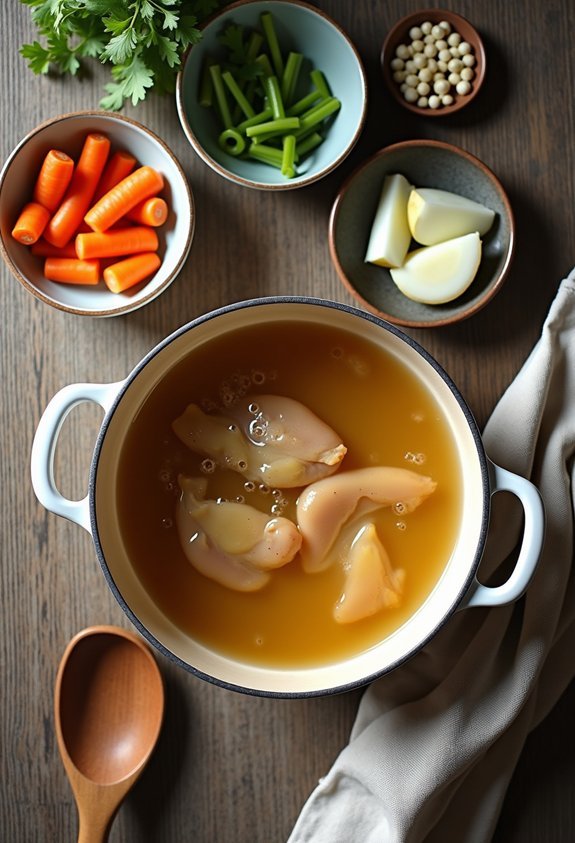
Begin by organizing your mise en place so each step supports both flavor and clinical intent: cut a whole chicken into parts to maximize surface area for gelatin and mineral extraction, rinse or wipe bones to reduce off-flavors, and measure your aromatics (onion, celery, carrot, garlic) in a roughly 2:1:1:0.5 ratio by volume for balanced sweetness and sulfur compounds.
Cover with cold water, then bring it slowly to a bare simmer; you’re coaxing nutrients, not chasing a rolling boil.
- Skim foam frequently; this lowers histamine load and impurities.
- Add salt gradually, tasting; you’re modulating sodium for circulation.
- Fold in herbs off-heat to preserve volatile oils and antioxidants.
- Notice how these soup techniques feel; reserve ingredient substitutions for later tonight inside.
Easy Swaps, Add‑Ins, and Dietary Tweaks
Although this broth starts with a classic template, you can adjust ingredients strategically to match specific clinical and dietary needs without losing its therapeutic value.
For more collagen and glycine, keep skin and joints; for lighter fat load, use only breast and skim visible fat after simmering. If you need gluten free options, swap noodles for cooked rice, buckwheat, or diced potatoes.
Increase anti‑inflammatory support with extra garlic, turmeric, and a grind of black pepper to enhance curcumin absorption. For vegan alternatives when chicken isn’t appropriate, simmer dried shiitakes, kombu, miso, and chickpeas; you’ll still deliver minerals, umami, and gentle protein.
Add leafy greens at the end for folate and vitamin K, or ginger for nausea relief. Sip slowly; notice how your body responds.
Storing, Freezing, and Reheating Without Losing Magic

Even after the pot leaves the stove, how you cool, store, and reheat this soup largely determines its safety, flavor, and nutrient retention. To keep collagen, minerals, and delicate phytonutrients intact, treat this batch like something precious you’re saving for your future self.
- Cool quickly: Divide into shallow containers; refrigerate within 2 hours to limit bacterial growth and preserve vitamin content.
- Smart storage tips: Use glass, leave headspace, label dates; finish refrigerated soup within 4 days.
- Gentle freezing techniques: Freeze broth and solids separately when possible; this maintains texture of vegetables and protein.
- Reheat with care: Thaw overnight in the fridge; warm on low until steaming, not violently boiling, to protect amino acids and aromatic compounds and keep sodium stable.
What to Serve With Your Bowl of Comfort
A well-chosen side can turn a simple bowl of chicken soup into a nutritionally complete, therapeutically targeted meal.
Start by pairing it with whole-grain side dishes, like toasted sourdough or dense rye, to steady post-meal blood glucose and enhance satiety through extra fiber.
Pair your soup with whole-grain sourdough or dense rye to stabilize blood sugar and keep you fuller longer.
Add a small salad of mixed greens, walnuts, and olive oil for polyphenols and omega-3 fats that quiet systemic inflammation.
For more protein, you might choose plain Greek yogurt with herbs; its probiotics support your gut barrier, which in turn modulates immune function.
Consider beverage pairings like warm ginger or peppermint tea to aid digestion, or weak black tea for gentle caffeine and additional antioxidants.
If you tolerate dairy, steamed milk offers tryptophan-driven calm that can ease you into sleep tonight.
When to Make This Soup (Beyond Sick Days)

Sometimes the best time to make this soup is when you’re perfectly well and want to reinforce resilience rather than repair it. You’re building a physiological buffer: collagen from slow-simmered bones supports joint integrity; electrolytes from vegetables and salt maintain fluid balance; protein stabilizes blood sugar and appetite.
Make a pot when you want to:
- Anchor cozy evenings with a high-protein, low-glycemic meal that prevents late-night grazing.
- Turn rainy days into a structured reset, using its sodium and potassium to rehydrate after travel or alcohol.
- Support training days, pairing the broth’s gelatin and amino acids with complex carbs for recovery.
- Prepare for stressful weeks, portioning and freezing servings so future-you feels held, nourished, and regulated through your nervous system tonight.
In case you were wondering
Can I Turn This Chicken Soup Into a Creamy Version Without Heavy Cream?
You can, love: simmer florets, blend into silky cauliflower puree, then whisk in light coconut milk. You’ll boost fiber, reduce saturated fat, maintain protein, and still cradle yourself in a clinically-comforting, velvety bowl each night.
How Can I Adapt This Recipe for an Instant Pot or Pressure Cooker?
You adapt it for an Instant pot by sautéing vegetables, adding ingredients, then cooking 8–10 minutes at high pressure with 10-minute natural release; studies show pressure cooking preserves 90% vitamin C, shortening cooking times significantly.
Is This Chicken Soup Safe and Suitable for Young Children or Toddlers?
Yes, you can serve this chicken soup to toddlers if you debone carefully, reduce sodium, and avoid choking hazards. Prioritize toddler nutrition with soft vegetables and protein, adjusting soup consistency thicker, cooled, and carefully seasoned.
Can I Prepare This Soup Ahead for a Dinner Party and Reheat Elegantly?
Like a gentle tide, you can fully prepare the soup a day ahead, chill rapidly, store at 4°C, then reheat slowly to 74°C; these prep methods and reheating tips preserve protein integrity, micronutrients, and texture.
How Do I Adjust the Recipe for High-Altitude Cooking Times and Temperatures?
At altitude, you’ll simmer the soup longer: as part of high altitude adjustments, increase cooking time 15–25%, maintain a boil, check chicken temperature reaches 165°F, taste broth; evaporation concentrates sodium, so adjust salt cautiously, slowly.
Conclusion
When you ladle up this soup, you’re not just soothing cravings—you’re nudging your physiology in the right direction. You hydrate, deliver protein for immune cells, and supply electrolytes and antioxidants in one bowl. In a randomized trial, hot chicken soup increased nasal mucus flow by about 9–10% versus cold water, supporting its reputation as “steam you can eat.” So when your body or mood dips, you can choose to intervene—one clinically‑savvy spoonful at a time.