How to Start Adult Coloring (Even If You Think You’re Not Creative)
You can start adult coloring today with one simple page, a few colored pencils, and permission to be imperfect. Choose soft, open designs—florals, mandalas, or peaceful scenes—so you don’t feel cramped or stressed. Use light pressure, slow breathing, and gentle layers of color to calm your body and mind. If you “mess up,” notice one thing you still like. You’ll soon see how easy supplies and tiny techniques can turn into real, soothing creativity.
What you will leave with
- Start with a few simple supplies: basic colored pencils, a sharpener, soft eraser, and inexpensive water-based markers—no fancy tools required.
- Choose easy, open designs like florals, mandalas, or simple landscapes so coloring feels calming instead of stressful.
- Use light pressure and gentle layering, building color slowly with small circular motions rather than pressing hard.
- Treat “mistakes” as part of the process—blend, erase lightly, or color over them instead of trying to make the page perfect.
- Focus on the relaxing ritual: slow your breathing, notice the colors, and enjoy a few quiet minutes rather than aiming for a masterpiece.
Why Adult Coloring Works Even If You Don’t Feel Artistic
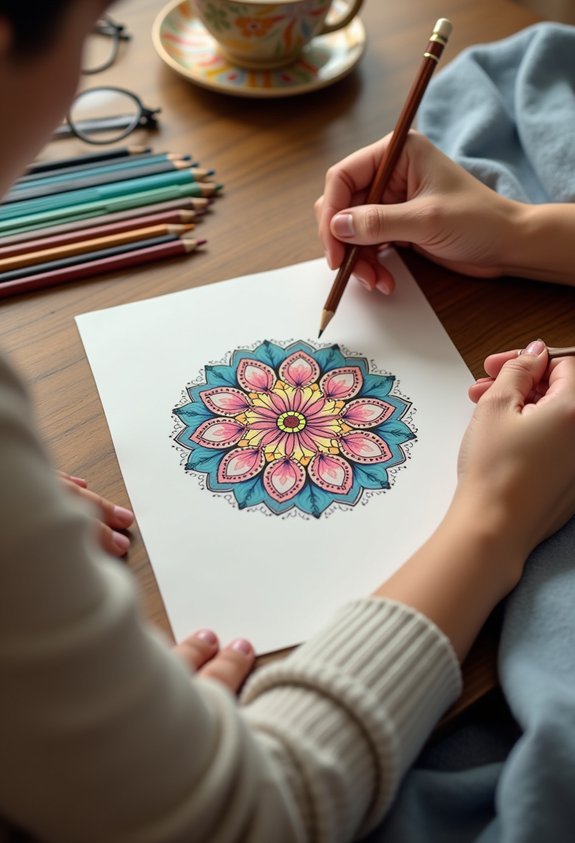
Even if you’ve always said, “I’m not artistic,” adult coloring gives you a gentle, low-pressure way to create something beautiful while calming your mind.
You’re not performing; you’re simply letting your hand move and your thoughts soften. Lines and shapes are already there, so you’re free to explore color without fear of ruining anything.
Coloring lets your hand wander and your mind loosen, with no pressure to get anything “right.”
That’s where the coloring benefits begin: your breathing slows, your shoulders drop, and your nervous system gets a quiet signal that you’re safe.
As you fill in each space, you practice choosing, noticing, and staying present—tiny acts of self-trust.
The result isn’t just a finished page; it’s stress relief that seeps into the rest of your day, reminding you you’re allowed to feel peaceful. You don’t have to earn this.
Simple Supplies to Start With (Without Spending a Lot)
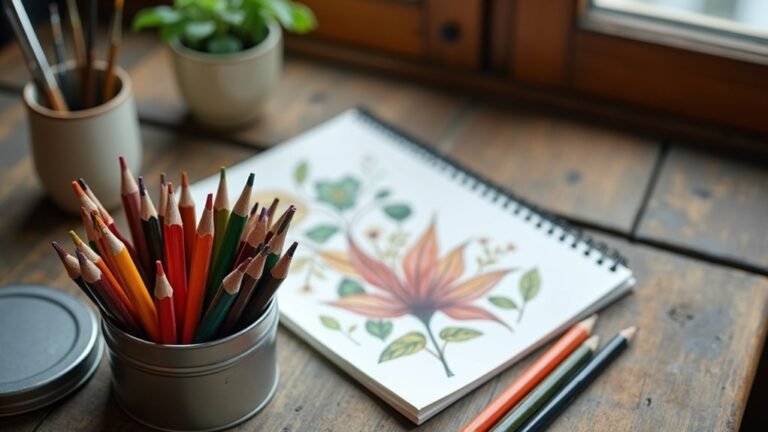
You only need a few simple tools to begin, and they don’t have to be fancy or expensive. Start with a small set of colored pencils; they’re forgiving, quiet, and easy to control. Add a basic sharpener and a soft eraser, and you’ve got enough to explore.
If markers tempt you, choose a modest pack of water-based ones so they’re less likely to bleed through. Test them on scrap paper first; let yourself play.
When you’re browsing coloring tools, give yourself permission to choose budget options. Discount-store sets, school supplies, or whatever’s already in your desk drawer are completely valid.
What matters isn’t luxury—it’s the gentle ritual of sitting down, breathing, and letting color move through your hands. That’s enough to begin, right here.
Choosing Coloring Pages That Feel Relaxing, Not Overwhelming
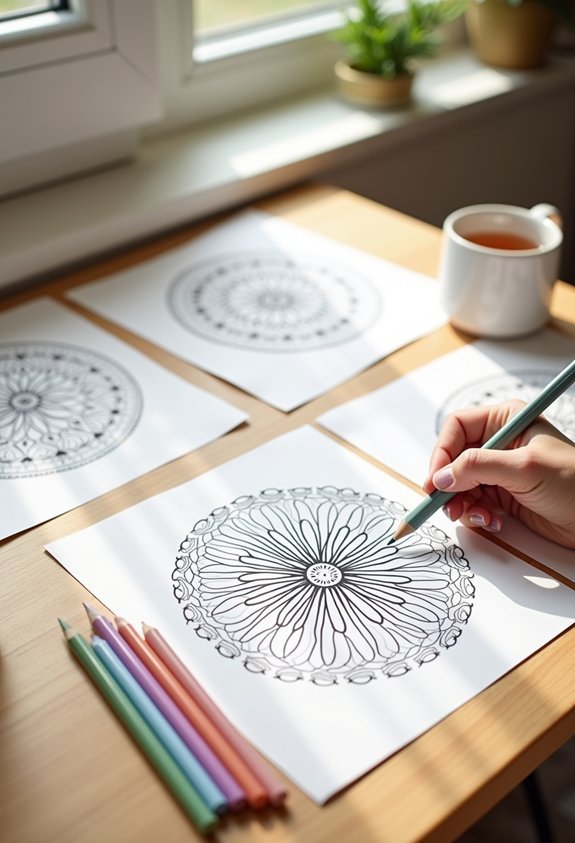
Gentle pages make coloring feel like a refuge instead of another task on your to‑do list. Start by choosing designs that let your body soften when you look at them. If a page feels cramped, busy, or makes your jaw tighten, it’s not for tonight.
Notice which coloring themes your nervous system reaches for: soft florals, calm mandalas, simple landscapes, cozy interiors, or even large abstract shapes. Give yourself page variety, but keep details roomy, with clear spaces for your pencil to glide.
It’s okay to stay with “easy” pages for a long time. You’re tending your mind, not proving anything. Let each page whisper, “You’re safe here,” before you ever pick up a color. Your only job is to breathe, notice, and enjoy.
Easy Color Choices When You Don’t Trust Your Eye
Once a calming page sits in front of you, the next hurdle often shows up as a quiet panic: “What if I pick the wrong colors?”
That worry can freeze your hand before the first stroke, especially if you don’t see yourself as “artistic.” Instead of treating color as a test, treat it like a set of friendly options you can lean on when your eye feels unsure.
Let color be a gentle suggestion, not a judgment on how “artistic” you are
Start with color wheel basics: pick any color you like, then choose the one directly across for a simple, vibrant pair.
If that still feels risky, limit yourself to three pencils that sit well together in their box; let the manufacturer’s choice guide you.
For evenings, follow color harmony tips: stay with cousins—blues, blue-greens, purples nearby.
Basic Techniques That Make Your Pages Look Polished

A few simple techniques can make a surprising difference in how “finished” your coloring pages feel, without demanding any special talent.
Think of them as small, quiet upgrades that whisper, “yes, I made this.” Use light pressure at first, then slowly layer color; it keeps things soft, forgiving, almost touchable.
- Let your blending techniques be gentle. Overlap colors with tiny circles, then burnish with a lighter pencil to melt edges together.
- Explore shading tips by darkening along lines, corners, and where objects overlap. You’ll feel depth bloom under your hand.
- Clean details with intention: outline important shapes, erase stray marks, and leave tiny highlights.
You’re not fixing mistakes—you’re honoring the care you’ve already given. Right here, your confidence begins to grow.
Turning Coloring Into a Soothing Daily Ritual
Soft routine can turn coloring from a quick distraction into a quiet anchor in your day. Choose a time—waking up, a lunch pause, or before bed—and gently protect it.
Begin by dimming lights, maybe lighting a candle, and letting your body settle. Notice your breath; practice mindful breathing, in and out, until your shoulders soften.
Before you pick a color, try setting intentions: “I’m here to unwind,” or “I’m nourishing myself.” Let that guide the pace of your hand. Keep your phone away, let silence or soft music hold you.
You don’t have to finish a page. What matters is showing up, touching the paper, and letting simple, repeated strokes remind your nervous system that you’re safe, softly, just for you tonight, to keep.
Overcoming Perfectionism and “I’m Not Creative” Thoughts
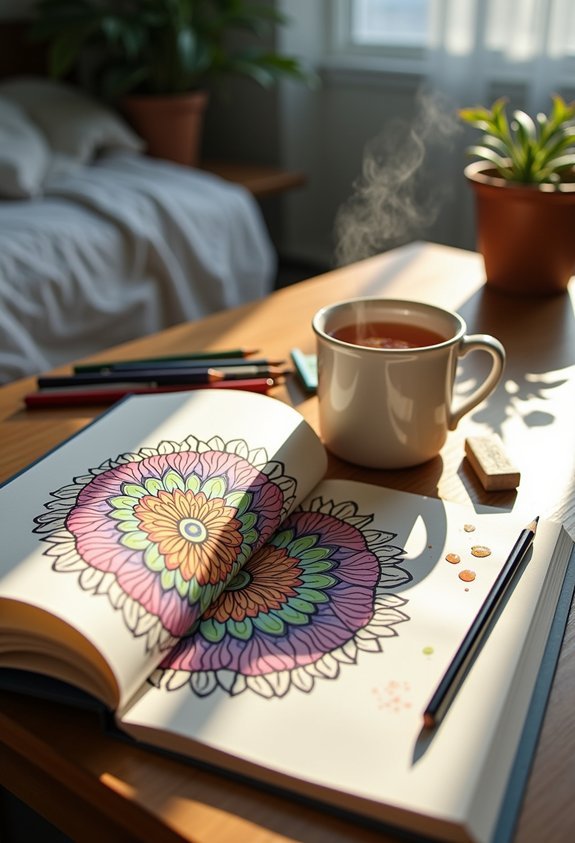
Even with a gentle ritual in place, your mind might still whisper, “I’m bad at this,” or “Real artists wouldn’t color outside the lines.”
Perfectionism and “I’m not creative” thoughts can sneak in fast, turning something soothing into something stressful.
Notice that voice, then soften it. You’re not failing; you’re meeting old creativity myths that kept you small.
- Pause when tension rises. Exhale slowly, unclench your jaw, and let your shoulders drop. Remind yourself: “This page doesn’t need to be perfect to be healing.”
- When you hit an artistic block, deliberately “mess up.” Choose clashing colors, scribble, or color past the border. Feel the relief.
- Finally, name one thing you secretly like about your page and let that be enough tonight.
Fun Ways to Color With Others or Share Your Work (If You Want To)
While coloring can be a deeply personal ritual, it can also become a gentle way to connect with others who crave the same kind of calm. You might start tiny: invite one trusted friend, brew tea, and spread pencils across the table.
Let pauses, not conversation, carry most of the evening. If group energy comforts you, experiment with relaxed coloring parties, where people arrive in soft clothes, phones silenced, playlists low. You can set a theme—night skies, memories, secret gardens—or simply share pages and see what appears.
If showing your work feels tender, try private online sharing platforms or small group chats, where you trade progress shots, kind words, and color ideas, never scores or judgments.
Let your pages whisper, not shout, their stories.
In case you were wondering
Can Adult Coloring Help With Focus or ADHD, Not Just Relaxation?
Yes, you can use adult coloring to deepen focus, not just relax; it becomes focus techniques, giving ADHD benefits like steadying racing thoughts, anchoring wandering attention, and letting you feel absorbed, playful, and in control.
How Long Should a Typical Coloring Session Last to Feel Beneficial?
You only need 10–20 minutes; research questions the myth that longer coloring duration always heals more. If you’re present, brief session benefits soften stress, slow racing thoughts, and remind you you’re worthy of gentle attention.
Is Digital Coloring on a Tablet as Effective as Paper Coloring?
Yes, it can feel just as soothing; you simply connect differently. With digital tools, you explore endless color palettes, relax your body, and let your mind soften, like a quiet conversation you’re having with yourself.
What Should I Do With Finished Pages I Don’T Really Like?
Keep pages you don’t love; they still witness your healing. Try repurposing artwork as gift tags, envelopes, or collages. Practice creative storage—tie them with ribbon, revisit later, and notice how tenderly your style’s evolving inside.
How Do I Protect My Hands and Wrists From Strain While Coloring?
Like a Victorian typist, you protect your hands by taking pauses, doing gentle hand exercises, using cushioned wrist supports, loosening your grip, rotating colors, and listening when your body whispers that it’s time to rest.
Conclusion
You don’t have to be an artist to pick up a pencil, to breathe a little deeper, to feel a little lighter. When you choose a page, when you choose a color, when you choose yourself, you’re practicing care, not perfection. Let coloring be your pause, your playground, your permission slip to be imperfect. One stroke at a time, you can quiet the noise and come home to yourself, whenever you need a gentle reset.