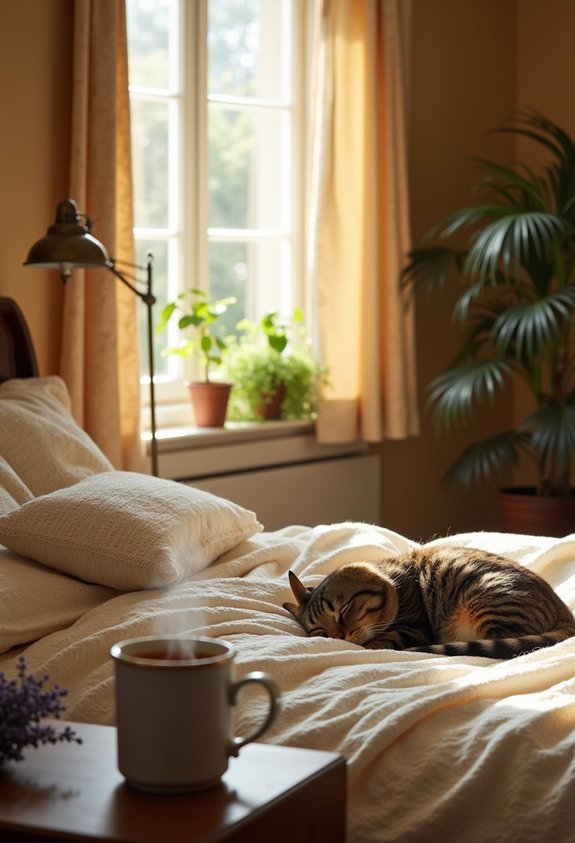
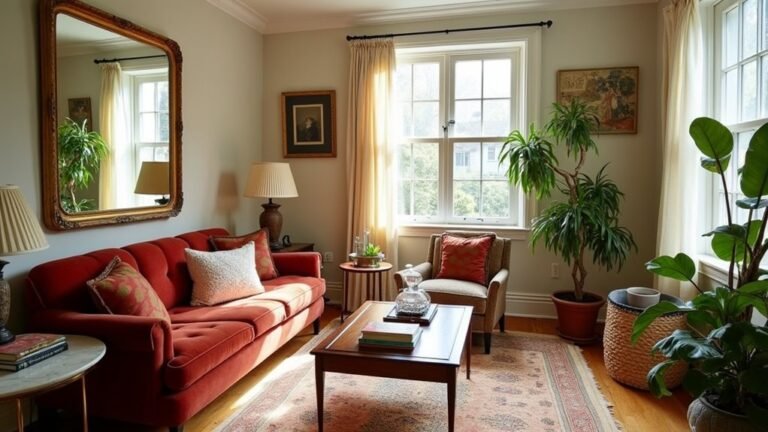
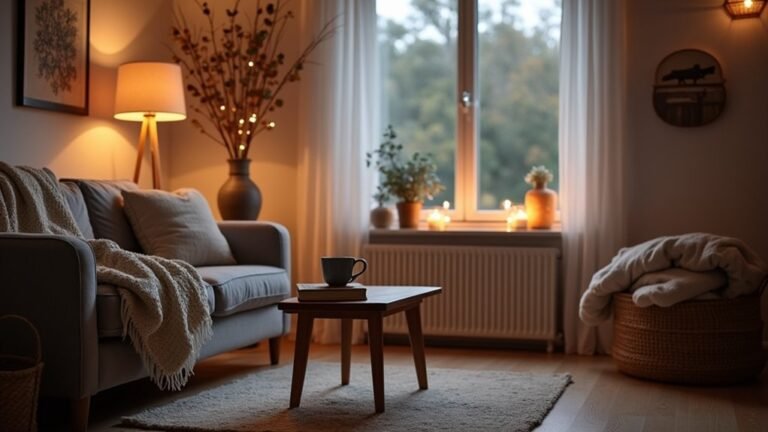
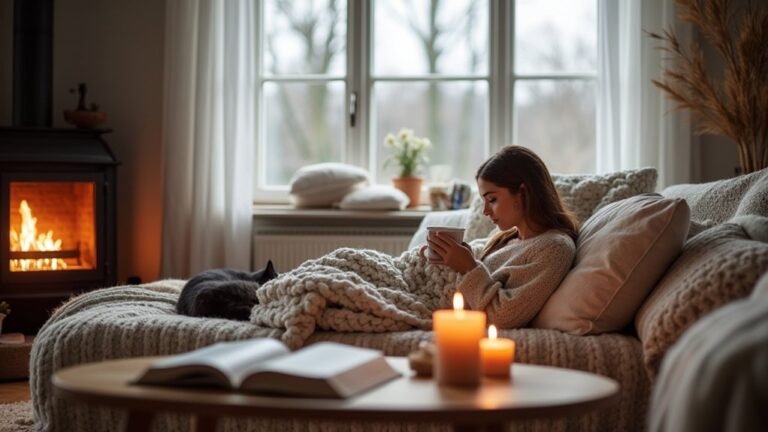
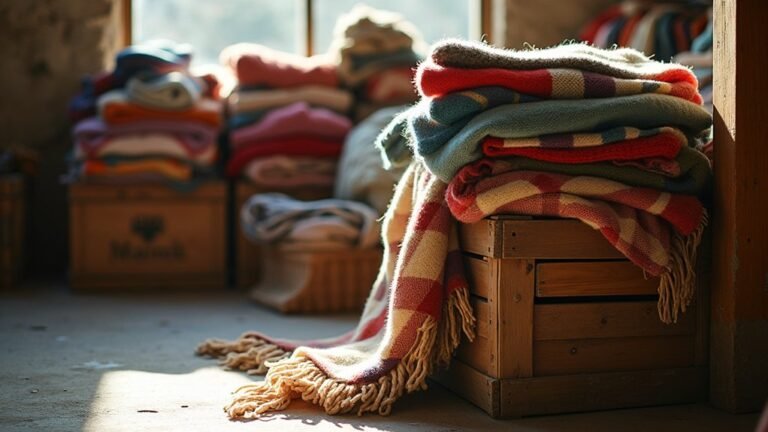
How I Created a Hygge Home for Under $200 at Thrift Stores
You turn a dark, echoey living room into a hygge retreat for under $200 by layering thrifted wood stools as side tables, a low-pile neutral rug, and wool or cotton throws over your sofa. Add warm-white bulbs in small fabric-shaded lamps, plus a few chipped ceramic mugs and bowls that catch the glow. Keep surfaces simple, cluster coziness in corners, and let worn textures guide you—next comes exactly how to pull it together at home.
What you will leave with
- Focused on small wooden stools, side tables, and low shelves to create cozy surfaces without bulky, expensive furniture.
- Thrifted warm-toned lamps with fabric shades and used soft white bulbs to layer gentle lighting at different heights.
- Collected natural-fiber textiles—wool throws, cotton quilts, linen pillow covers—and layered them to add depth, warmth, and softness.
- Chose simple ceramic mugs, bowls, and vases that doubled as both decor and everyday functional pieces.
- Curated meaningful secondhand art, worn books, and sentimental objects, keeping surfaces uncluttered so each piece felt intentional and calming.
Defining My Hygge Vision on a Thrift-Store Budget

Before you spend a single dollar, stand in the center of your room and imagine how you want it to feel on a dark, rainy evening: warm light pooling onto worn wood, soft textiles layered over a scuffed sofa, a chipped ceramic mug resting on a thrifted side table.
Let that scene guide your hygge principles: comfort, simplicity, closeness. You don’t need perfection; you need textures that whisper home.
As you consider thrift shopping, think in palettes and touch: nubby knits, honeyed wood. Picture how each find will warm the room you have, not imagined loft.
Let your budget feel like a boundary that focuses your desire, so every object you welcome in has a clear job: to soften, hush, and gather you close.
Planning the Space: What to Hunt For (and What to Skip)
Once you’ve pictured that rainy-evening glow, you can start planning what actually fills the room.
Begin with the bones: surfaces, light, and storage that quietly hold your rituals. Use clear thrift store strategies so every piece earns its footprint.
- Prioritize small wooden tables or stools; tuck them beside chairs for candles, books, a shared mug.
- Hunt for warm-toned lamps with fabric shades; soft, low light pulls the walls closer.
- Choose simple ceramic mugs, bowls, and vases; cluster them on trays to anchor little islands of calm.
- Skip bulky media units and anything wobbly or over-ornate; they crowd the floor and dilute the mood.
Let budget friendly essentials support proximity, not clutter.
Leave breathing space so every touchpoint feels intentionally inviting.
Cozy Textiles: Blankets, Pillows, and Rugs for Less
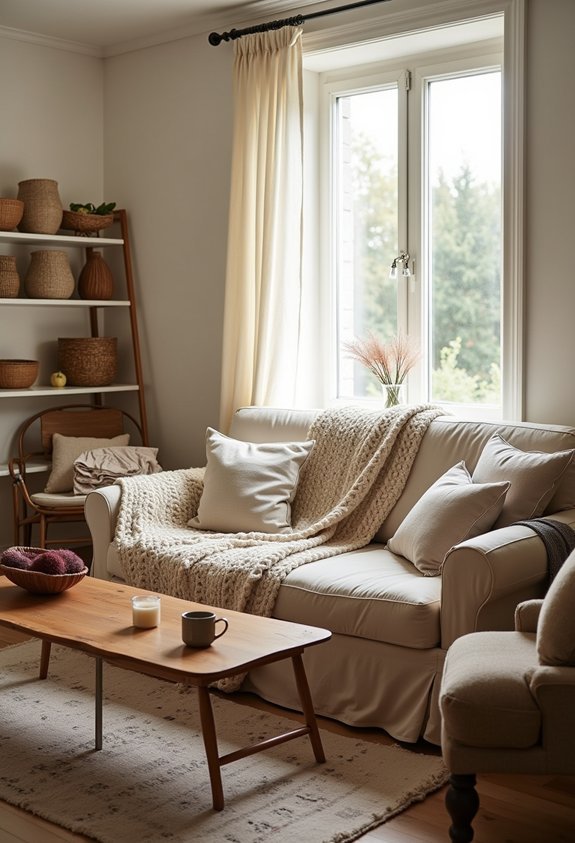
Layered textiles do more than warm you up; they soften edges, mute echoes, and visually pull the room in.
At the thrift store, run your hands over everything first; let textile textures guide you. Look for natural fibers—cotton, wool, linen—that feel breathable against bare skin.
Mix a heavy knit throw with a smoother cotton quilt at the foot of your sofa or bed. Use layering techniques with pillows: one large neutral, one medium with quiet pattern, one small in a moodier tone.
On the floor, anchor space with a low-pile rug, then slide a sheepskin or woven runner on top. Each overlap shrinks the room’s emotional distance, inviting you to tuck your feet under and stay, while the day’s weight slowly loosens its hold.
Warm Lighting: Lamps, Candles, and Soft Glows From Secondhand Finds
Two or three well-placed light sources can turn a cheap room into a cocoon. At the thrift store, you’re hunting for glow, not brands. Scan for heavy ceramic bases, frosted glass, brass with a soft patina—materials that warm up when lit.
- Pair a low table lamp with a higher floor lamp so light pools at different heights, wrapping the room instead of blasting it.
- Swap harsh bulbs for warm white; you’ll feel the lighting ambiance soften instantly.
- Cluster thrifted treasures—amber glass votives, tiny oil lamps—on a tray, letting each flame flicker against curved surfaces.
- Tuck a small lamp on a dresser or bookshelf corner, so its shade throws a hush of light over rumpled blankets and worn pages at night.
Natural Elements: Wood, Wicker, and Greenery on a Dime
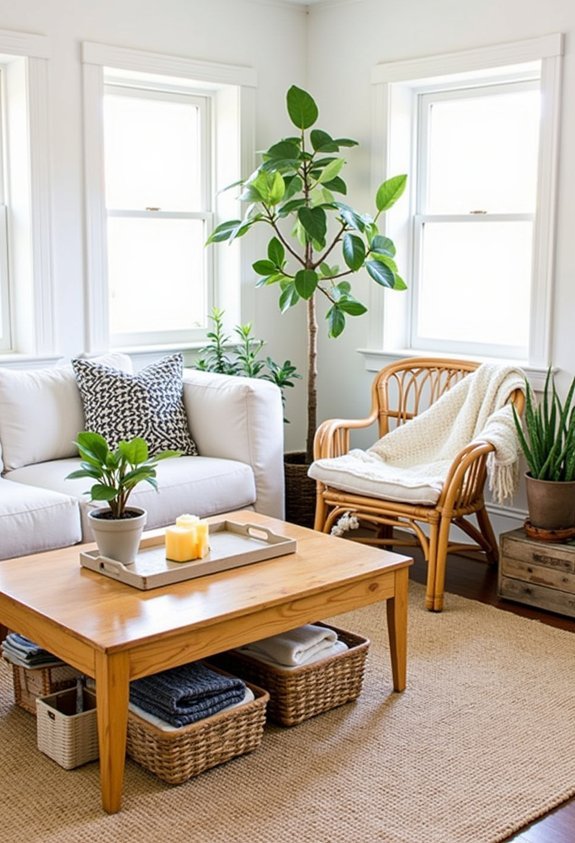
Grain, weave, and leaf bring hygge down to earth without straining your budget.
Start with small wood accents: a honeyed picture frame, a slim tray for keys, a worn cutting board leaning against the backsplash.
At the thrift store, run your fingers along textures; choose wicker baskets with tight, unbroken reeds to tuck beside the sofa for throws.
Anchor corners with forgiving indoor plants in mismatched terracotta, their leaves softening hard edges of floor and wall.
If live greenery feels risky, use sturdy faux stems and keep them low, near lamplight.
Scatter smooth decorative stones on a windowsill or in a shallow bowl; they catch light, invite touch, and quietly ground the room.
Let every surface whisper nature, gathered slowly, affordably, just yours alone.
Meaningful Decor: Art, Books, and Personal Touches From the Thrift Aisles
Story lives in what you hang, stack, and tuck onto your shelves, and the thrift aisles are full of quiet, inexpensive pieces waiting to carry it.
You’re not just decorating; you’re curating small altars to your everyday life. Look for thrift finds that feel handled, softened, a little imperfect:
- Framed sketches or landscapes with worn mats that add hushed color to narrow wall slivers.
- Hardcover books with linen spines you can stack under a candle, letting titles whisper along the edge.
- Small ceramic bowls for keys, matches, or earrings, pooling light on a bedside corner.
- Sentimental pieces you rediscover—a vintage frame, a handwritten card—placed where your hand naturally pauses.
Let each object earn its spot, so the room feels held, not crowded, with intention.
Styling the Room: Layering, Mixing Styles, and Creating Flow

Once you’ve gathered your pieces, the room comes together in how you layer them—textures brushing against each other, heights stepping up and down, colors passing the eye gently from one corner to the next.
Start with anchors: the sofa, rug, and main lamp. Use layering techniques to soften edges—a woven throw over tweed, linen pillows against smooth leather, a small sheepskin draped on a wooden chair.
Let surfaces speak to each other: warm wood beside cool pottery, matte books under a glossy vase. When mixing patterns, keep hues related; let one bolder motif lead while the others whisper.
Step back often, checking sightlines from the doorway and your favorite chair, adjusting pieces until the room feels quietly inevitable, soft, lived-in, and deeply, unmistakably yours.
Full Cost Breakdown: How I Stayed Under $200 and What I’d Do Differently
As all those layers settle into place, the next question is what they actually cost.
You tuck your receipts beside a warm mug and map the room in dollars, from floorboards to lamplight.
Here’s how the total stayed just under $200:
- Textiles: $72 — wool-blend rug, cotton throws, linen pillowcases softening every hard surface.
- Lighting: $46 — two brass thrift store treasures, plus beeswax candles pooling golden light in dark corners.
- Storage & tables: $58 — solid wood side table, woven baskets corralling blankets and books.
- Art & objects: $22 — frames, pottery, and a single carved bowl anchoring the coffee table.
Next time, you’d reserve more for lighting and skip fragile pieces—your quiet budget friendly hacks that still glow.
In case you were wondering
How Do I Clean and Disinfect Thrifted Items Without Damaging Them?
You clean and disinfect gently: test hidden seams, dilute mild soap, wipe wood grain, mist fabrics with vodka or steam, avoid harsh bleach. For thrifted item care, choose safe cleaning methods that preserve patina’s glow.
How Can I Avoid Pests Like Bedbugs When Buying Secondhand Furniture and Textiles?
You’ll avoid bedbugs by knowing infestations rise 44% in areas: pest prevention furniture inspection, scrutinizing seams, joints, and underside fabrics, then seal textiles in heat-treated bags, quarantine pieces in corner, and vacuum crevices before embracing.
What Should I Know About Return Policies and Negotiating Prices at Thrift Stores?
You ask staff about return policies before you’re sure that velvet chair belongs in the corner, then practice price negotiation, noting scuffs, loose joints, and wear, letting your hands linger on textures while naming budget.
How Long Did It Actually Take to Find Everything for This Hygge Makeover?
It took you three breathless weekends, endless loops, a galaxy of patience. With time management and tender shopping strategies, you curated wool throws, amber lamps, cedar frames that softened every corner into hush and glow.
How Can I Adapt These Hygge Thrift Ideas for Homes With Kids or Pets?
You adapt these ideas by choosing rounded wood pieces, washable throws, and pet safe textiles, then tucking baskets of toys under benches so kid friendly decor stays soft, low, and glowing around your shared paths.
Conclusion
As you sink into your thrifted armchair, mug warm in your hand, notice how every surface now tells a quiet story. That $4 wool blanket draped over the arm is proof that comfort doesn’t need a designer label. Like fitting puzzle pieces into place, you’ve mapped warmth into each corner—woven, stacked, and layered. Your hygge home isn’t perfect; it’s lived‑in, intentional, and entirely yours, built one softened edge at dusk and dawn.