The Sunday Thrifting Routine That Changed My Life
You stop at a thrift store one random Sunday, just to browse, and suddenly it becomes a weekly ritual that reorients your whole life. You set a gentle budget, make a tiny list, and wander aisles of worn denim, mismatched mugs, and candle‑wax air, hunting for pieces that feel like lost parts of you. Over time, this quiet routine reshapes how you spend, dress, and decorate—and that’s where the story really starts for you next.
What you will leave with
- I set a fixed Sunday budget and short wish list, which turned impulse hunting into intentional, guilt‑free treasure finding.
- Arriving early and doing a slow lap to scan prices, sales, and store layout made every trip calmer and more productive.
- I shop with my emotions in mind, choosing chaotic bins when I crave the hunt and curated shops when I need soothing.
- Holding each item and asking if it truly excites me helped me curate a personal style instead of hoarding cheap clutter.
- Chatting with regulars and staff turned thrifting into a weekly community ritual that supports sustainability, savings, and a deeper sense of belonging.
How a Casual Browse Turned Into a Weekly Ritual

Even if you only meant to “just look around,” it’s funny how one random stop at a thrift store can quietly rearrange your whole week.
You wandered in once, half-distracted, letting your eyes drift in that soft, casual browsing way—fingers brushing hangers, the faint scent of old perfume and washed cotton wrapping around you.
Then you spotted it: a worn-in denim jacket that somehow felt like a memory you hadn’t lived yet. You bought it, wore it home, and the day suddenly felt fuller, like you’d rescued something.
That worn-in denim jacket felt less like a purchase and more like finding a missing piece of myself
After that, you kept going back, chasing that small spark. Before you noticed, this little detour folded itself into your weekly routine, a standing date with possibility and quiet, private joy you never had before entirely.
Preparing for Sunday: Budget, Lists, and Loose Plans
By the time Sunday rolls around, a little structure can make your thrift ritual feel less like a gamble and more like a small, intentional adventure.
You start with quiet budget tracking, maybe on your phone, maybe with that soft, frayed notebook you always reach for at the kitchen table. Give yourself a number that feels firm but kind, something you can honor without feeling punished.
Then comes list making: worn-in denim, a lamp for the corner, maybe a “someday” category you underline twice. I like to jot mine on sticky notes and tuck them in my bag, a small promise to my future, wandering self.
Loose plans follow: a rough time window, comfortable shoes by the door, a snack so you don’t rush.
Choosing the Right Thrift Spots for Your Mood and Goals

Once you’ve got your list and budget, the question quietly shifts from “What do I need?” to “Where do I actually want to be today?”
Some Sundays call for the chaos of a pay‑by‑the‑pound warehouse—fluorescent lights, rolling bins, that electric feeling that anything might surface if you dig long enough.
Other days, you crave the hush of a tiny curated shop, where blouses are already color‑blocked and someone burned incense an hour ago.
Let your mood alignment guide your map. When you’re restless, choose places that let you hunt; when you’re tender, choose shops that feel like someone edited the world for you.
That’s how goal setting stays gentle: you’re not just chasing deals, you’re choosing environments that hold you, when you finally exhale.
The Art of Arriving Early and Reading the Room
Sometimes the real magic of thrifting starts before you even touch a hanger: it’s in how you show up. When you practice early arrival, you give yourself a quiet few minutes to exhale in the parking lot, reset your energy, and slip inside before the space fills with other people’s moods. You’re not rushing; you’re tuning in.
As you walk through the door, notice the room dynamics: the volunteer steaming blouses, the regular with a cart already half-full, the couple laughing over ugly lamps.
Let that vibe guide your pace. Some mornings call for slow, meditative wandering; others want quick, focused passes. When you read the room first, your instincts sharpen, and the pieces meant for you somehow stand out, just waiting for you.
My Step‑by‑Step Walkthrough of a Typical Thrift Run

Even after all these years of thrifting, I still follow the same loose ritual every time I walk through those automatic doors.
You grab a cart only if you’re feeling serious; otherwise, you let your hands stay free, ready to skim hangers. First, you do a slow lap to check prices, sales, and posted thrift store etiquette—no hoarding, no snatching from other carts. You notice what’s crowded, what’s quiet.
Then you move toward whatever your life needs most this week—maybe cozy knits when seasonal trends shift, or glassware when you’re nesting harder. You keep a gentle curiosity, touching fabrics, peeking at shelves, letting your body tell you when to pause and when to move on.
Finding Hidden Gems: Strategies for Clothes, Home, and More
You’ve done your slow lap, checked the vibe, and let your hands wake up on a few hangers—now the real treasure hunt starts.
Drift toward the racks that look a little neglected; that’s where the vintage clothing hides. Run your fingers for weighty denim, real silk, wool that still feels alive. I always scan cuffs, collars, and buttons first—tiny details whisper age and quality.
Let your hands do the hunting—quality hides in weight, texture, and the quiet details.
For home decor, step away from the color‑blocked shelves and look low, even behind ugly pieces. I once found a heavy brass candlestick buried under plastic vases, dusty but perfect.
Trust your senses: the clink of solid glass, the cool of real wood, the patina that makes something feel quietly loved. Let curiosity lead; your best finds rarely feel obvious.
Mindful Buying: Distinguishing Treasure From Clutter

Once the rush of spotting a “find” kicks in, the real skill is pausing long enough to ask if it’s treasure or just future trunk clutter.
Let yourself hold the item for a moment. Feel its weight, notice the fabric, imagine where it would live in your home or closet. If you can’t picture it belonging, you’ve got your answer.
I like to ask, “Would I be excited to use this next week?” If the thrill fades, I put it back. That tiny pause turns browsing into mindful consumption.
You’re not depriving yourself; you’re curating. You’re choosing pieces that support who you’re becoming, not who you used to be, and those intentional choices feel quietly radical.
Your cart becomes a mirror, not a distraction.
What Thrifting Taught Me About Money, Value, and Waste
- You see financial literacy in action: comparing quality, lifespan, and cost instead of chasing sales.
- You learn that “used” doesn’t equal “useless”; it often means “proven it can last.”
- You feel the environmental impact in your body when you rescue something from the path to landfill.
- You realize every purchase is a vote, so you buy less, choose slower, and keep more cash—and conscience—intact.
That quiet discipline slowly reshapes how you trust yourself.
Building a Personal Style and Home Aesthetic From Secondhand Finds
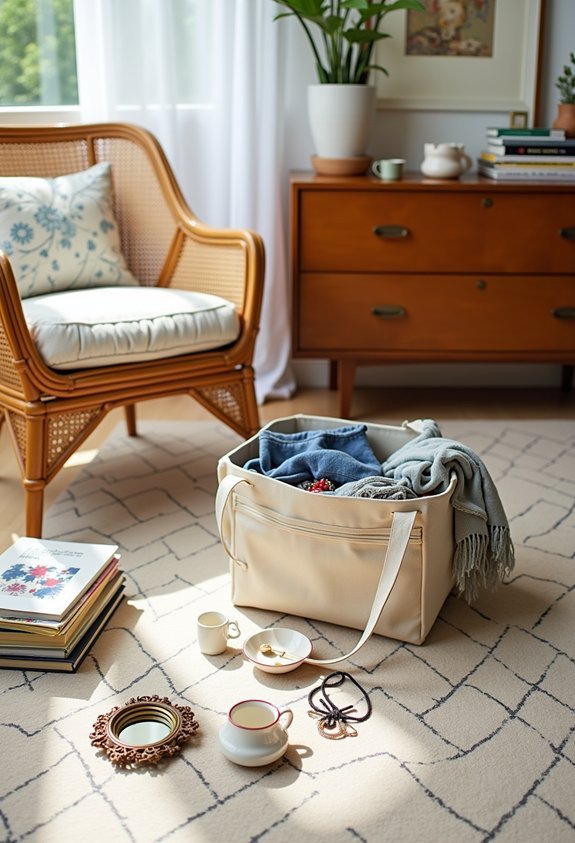
A funny thing happens when you build your style from secondhand finds: instead of copying a mannequin or an influencer’s grid, you start dressing like the most honest version of yourself. You’re not chasing trends; you’re following tiny jolts of recognition. That silk blouse reminds you of your aunt’s perfume, that chipped mug feels like mornings you haven’t lived yet.
You begin to trust your eye. Racks stop looking chaotic and start feeling like a secret language of personal expression.
At home, you mix soft lamps, rough wood, and odd little paintings until the room feels like a diary you can walk into. Vintage aesthetics stop being a look and become a texture—sun-faded, mismatched, quietly certain, deeply yours. Nothing store-bought ever feels this intimate.
Turning Sunday Thrifting Into a Sustainable, Life‑Giving Habit
Even before you find anything worth buying, there’s something quietly sacred about turning Sunday thrifting into a ritual instead of a random errand.
You’re not just hunting bargains; you’re building sustainable habits that feel tender and deliberate. I think of it as a standing date with yourself: coffee in hand, soft music in the car, empty tote bags waiting.
- Arrive when the doors open, so the store still feels sleepy and full of possibility.
- Walk every aisle slowly, letting your breath match your pace.
- Limit yourself to what fits in your basket; curate instead of hoarding.
- Chat with regulars and staff; let the thrift community start to recognize your face.
Over time, this rhythm steadies you, far beyond your closet and spills into Monday.
In case you were wondering
How Do I Invite Friends or Family Without Losing My Personal Thrifting Flow?
You invite them as co-conspirators: you’ll share route, set quiet-time rules, and whisper your thrifting etiquette like a spell. Protect your flow by splitting racks; group dynamics stay gentle, like wandering together in soft whispers.
What Should I Wear to Make Trying on Clothes Easier and Faster?
You dress like a commitment-phobe: comfortable layers, a fitted tank, leggings, and slip-on easy footwear so you undress faster than your ex emotionally, letting you dive in, twirl, discard, and conquer every dusty mirror today.
How Can I Sanitize and Clean Secondhand Items Once I Bring Them Home?
You toss everything into hot cycles when you can, then shift to gentle fabric care for silks and wools, spritzing vodka or vinegar mixes, wiping soles with disinfecting methods, and letting sun and air purify.
How Do I Track What I’Ve Thrifted Over Time to Avoid Duplicates?
Like curating a tiny museum of you, you jot finds in a thrift journal, noting colors, brands, sizes, stories; then you use app tracking with photos, so future treasure hunts don’t accidentally replay old loves.
What’s the Best Way to Resell or Donate Items That No Longer Serve Me?
You gently sort everything into three piles: list on resale platforms, bring to donation centers, or gift to friends. I swear, when you watch those bags leave your doorway, your closet’ll breathe and soften again.
Conclusion
By now, you can see how a simple Sunday thrift run becomes so much more than shopping. You wander aisles, trust your gut, and let worn‑in denim and chipped mugs whisper their stories. As the saying goes, one person’s trash is another person’s treasure—and you’re proof. When you head home, bags light but heart full, you’re not just saving money. You’re shaping a life that feels intentional, creative, and completely your own.