25 Thrift Store Finds That Make Your Home Look Expensive
You can walk into almost any thrift store and pull pieces that instantly upgrade your home. Look for framed original art in gilded or dark wood frames, solid wood dressers with dovetail joints, and vintage mirrors with wavy glass and ornate edges. Add crystal stemware, real linen napkins, textured throws, and brass hardware for quiet luxury. Architectural room dividers, classic mantel clocks, and sculptural lamps complete the look—and these are just the beginning of what you can uncover.
What you will leave with
- Invest in framed original art, oil paintings, and vintage mirrors with ornate frames to instantly add character, depth, and a high-end gallery feel.
- Seek solid wood dressers, sideboards, and simple pedestal or Parsons-style tables with quality joinery and patina for grounded, expensive-looking foundation pieces.
- Prioritize designer-style picture frames and swap in minimalist prints, photos, or pressed botanicals to create a curated, custom gallery wall on a budget.
- Choose sculptural ceramic vases, pottery, and dense velvet or textured throw pillows in sophisticated color palettes to introduce quiet luxury through materials and silhouette.
- Hunt for statement chandeliers, pendant lights, and oversized lamps, then rewire or re-shade them to create warm, intimate, high-impact lighting.
Framed Original Art and Oil Paintings
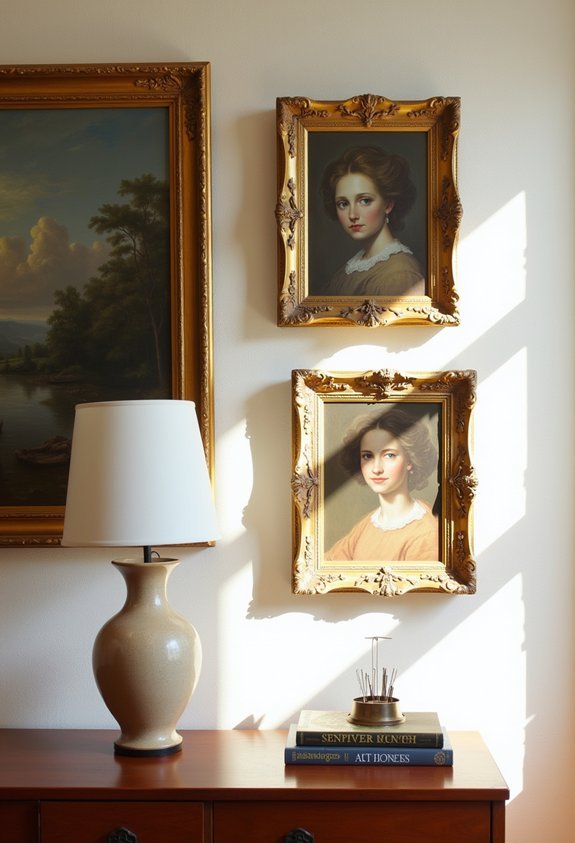
Among the crowded racks and chipped vases, framed original art and oil paintings are where a thrift store can quietly rival a gallery. You’re not just hunting décor; you’re choosing the mood of your rooms.
Look for pieces with visible brushwork, layered color, and signatures, even faint ones. Notice the artistic styles that pull you in—moody landscapes, tender portraits, abstract fields that feel like weather on your skin.
Study framing techniques: slender gilded frames read refined, while deep, dark wood profiles make color glow. Check corners for gaps, warping, or clouded glass; flaws here cheapen everything.
When you bring a piece home, let it breathe on a clean wall, slightly lower than eye level, so it feels intimate, inviting, every time you pass it.
Solid Wood Dressers and Sideboards
Even before you spot the grain, solid wood dressers and sideboards feel different—heavier, quieter, more anchored. You run your hand along the top and notice tiny dings, softened corners, subtle warping; these flaws read as history, not damage.
Every softened edge and tiny ding records a life already lived—and ready to keep living with you.
- Look for vintage finishes with depth: crazed lacquer, rubbed edges, slightly darker drawer fronts. They photograph beautifully and instantly elevate blank walls.
- Open every drawer. Quality pieces glide, even when old. Dovetail joints, solid backs, and weighty interiors tell you the piece will age with you, not collapse.
- Study the unique hardware. Original brass pulls, keyholes, or ceramic knobs can become jewelry for your room; if they’re mismatched, keep them—they whisper that this piece was loved.
Let morning light move slowly across it.
Vintage Mirrors With Ornate Frames

How does a single mirror manage to feel like both furniture and architecture? When you bring home a vintage mirror with an ornate frame, you’re really installing a quiet stage for light, reflection, and ritual.
In thrift stores, look for real wood backs, wavy glass, and carved details with depth, not stamped plastic. Gilded frames with worn edges invite antique mirror restoration: touch up the finish, but keep hints of patina so it doesn’t lose its history.
Let your find anchor mirror wall decor above a mantel, console, or dresser, reflecting something intentional—a window, a pendant, a favorite painting.
Hang it slightly lower than you think; you’re creating intimacy, not a lobby. One exquisite frame can command the entire room with quiet, undeniable luxury.
Crystal and Cut-Glass Stemware
Mirrors amplify light on your walls; crystal and cut‑glass stemware do the same on your table. You’re not just buying glasses; you’re collecting prisms that flirt with candlelight.
In thrift aisles, look for a heavy base, a fine rim, and sharp, clean cuts that catch your thumb.
- Hold each piece up to the light; quality crystal throws tiny rainbows and sounds like a bell when you tap it.
- Mix patterns in the same color family so every vintage cocktail feels like a discovery, not a mismatch.
- Display stems on an open shelf or bar cart, where their silhouettes suggest elegant entertaining long before you pour anything.
Choose only what you’d happily photograph up close. Let the sparkle whisper quiet, luxurious promise.
Linen and Cotton Tablecloths and Napkins
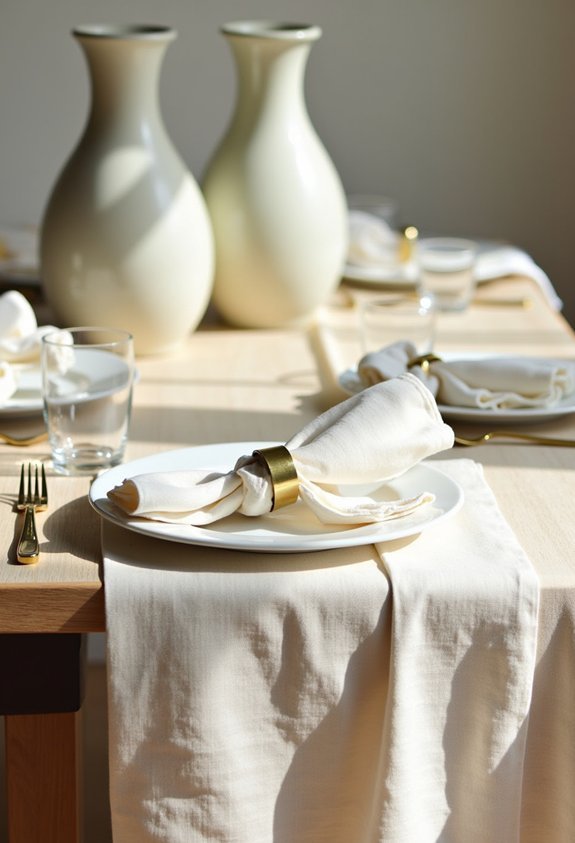
Cloth on a table is architecture in fabric, softening hard surfaces and setting the mood before a single plate goes down.
In thrift stores, you’re hunting for linen and cotton that drape with weight, not stiffness. Run your fingers along the hem; tight, even stitching signals high fabric quality and quiet luxury.
Choose muted whites, oyster, or natural flax for an effortless table setting, then layer in one unexpected tone—ink, rust, or moss—for tension.
Don’t fear light staining; you can often lift it with an oxygen soak or disguise it by folding. Oversized napkins feel indulgent, inviting guests to linger.
When you press them crisp, then rumple them slightly, everything looks unstudied yet deeply considered. That small care makes the whole room feel curated.
Statement Chandeliers and Pendant Lights
Once the table’s dressed, the next layer of atmosphere hangs overhead. Thrifted statement chandeliers and pendant lights instantly deepen the room’s mood, pulling eyes upward and drawing people closer.
- Hunt for vintage fixtures with sculptural silhouettes—brass arms, milk-glass globes, smoked glass. Picture them dimmed, hovering like jewelry above your conversations.
- Explore bohemian lighting: woven rattan pendants, pierced metal lanterns, colored glass. Their shadows trace soft patterns on walls, wrapping the room in quiet drama.
- Look past dusty bulbs and dated chains. You can rewire, shorten, or swap shades, preserving the soul while refining the profile.
Hang your find slightly lower than expected over the table so faces glow warmly, not the ceiling. That subtle drop makes every meal feel curated, intimate, and quietly luxurious.
Marble and Stone Accent Pieces
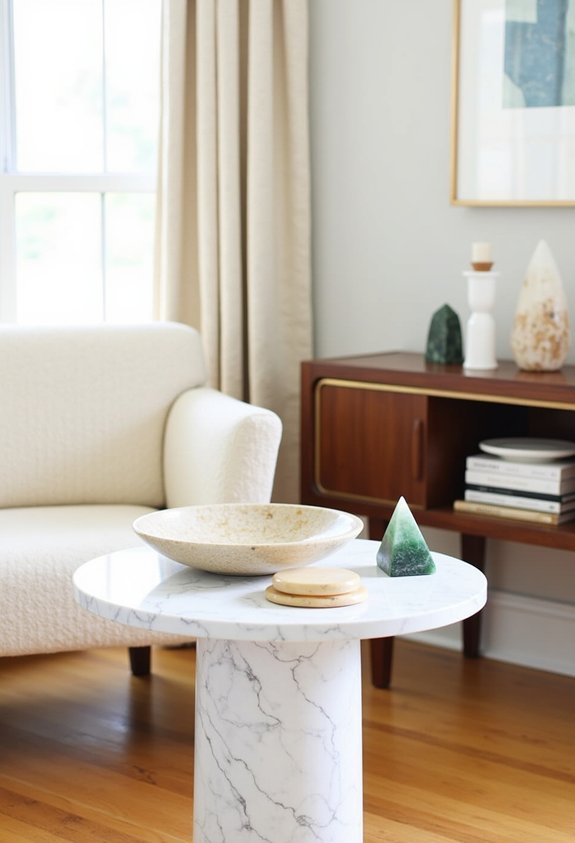
A single piece of marble or stone instantly grounds your thrifted mix, adding weight, polish, and a sense of permanence that fabrics and wood can’t match.
In thrift stores, head first to the kitchen aisle: you’ll often find discarded marble coasters, pastry boards, or lazy Susans with subtle veining and soft, honed edges.
Layer a small slab under a lamp or a stack of paperbacks to create an instant vignette that feels composed, not cluttered.
Seek out stone sculptures with imperfect silhouettes—carved birds, abstract torsos, quiet faces—and let one anchor a nightstand or windowsill.
The cool, dense surface whispers luxury every time you brush past, and the natural variations in color make your space feel collected over years, not weekends, rather than impulsively assembled.
Brass Candlesticks and Accessories
Two or three thrifted brass candlesticks can do more for a room than a whole cart of impulse buys. You’re hunting for weight, height, and that soft brass patina that feels quietly collected, never flashy.
Skip the cart; a few weighty, softly tarnished brass candlesticks transform a room effortlessly.
- Mix slender tapers with chunkier, sculptural candlestick styles on a console or mantle. Let the heights stagger so the candle flames read like a skyline.
- Look for pairs, then add one “odd” piece. That asymmetry keeps the vignette from feeling hotel-perfect and makes it feel like you.
- Don’t fear tarnish. Deepen the brass patina by cleaning only the high points, leaving the recesses dark.
Under candlelight, that contrast catches every flicker and pulls the eye, making even a humble corner feel curated and quietly, irresistibly, expensive.
Quality Area Rugs and Runners
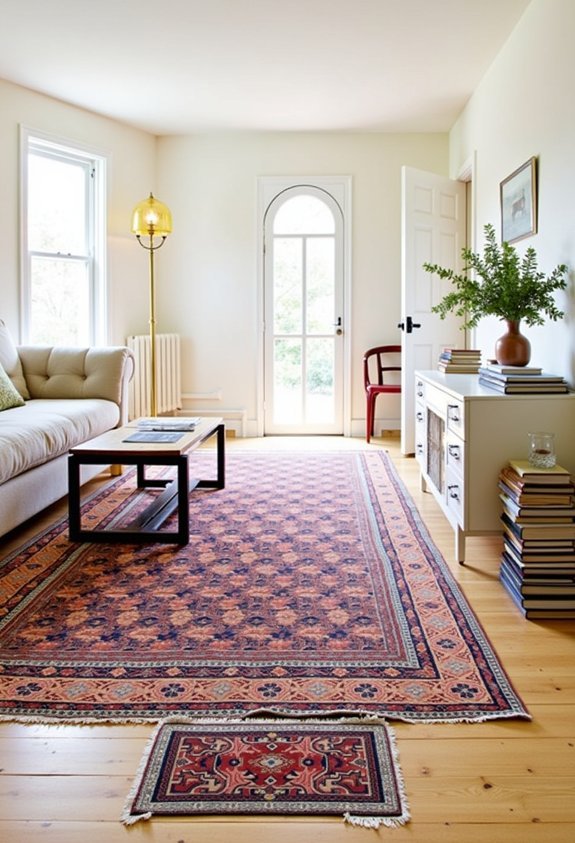
When brass candlesticks are in place, your eye naturally drops to the floor—where a quality rug can quietly anchor everything you’ve styled above.
In thrift stores, ignore flimsy synthetics and reach for wool, jute, or other eco friendly materials; they wear gracefully and feel indulgent under bare feet. Look for vintage patterns with softened palettes—dusty indigo, tobacco, faded rose—that whisper history instead of shouting for attention.
Flip rugs over: a crisp backing and dense knots usually signal quality. For runners, let them skim close to your wall color so hallways feel elongated, not chopped up.
Layer a smaller, intricate rug over a larger neutral to suggest custom design, not a hurried, one-and-done purchase. That quiet layering reads intentional, edited, and undeniably high-end to guests.
Classic Coffee Tables and End Tables
Though they’re often overlooked for flashier pieces, coffee tables and end tables quietly define how polished your living space feels. In thrift stores, look past trendy laminate and hunt for vintage table styles with honest weight and clean proportions.
- Seek solid wood bases—walnut, oak, or maple—and run your hand along the edges; a softened corner or beveled lip instantly reads high-end.
- Prioritize unique table materials: smoked glass, stone tops, caned shelves, or brass stretchers that echo the hardware on nearby cabinets.
- Keep silhouettes simple. A classic Parsons rectangle or round pedestal lets your books, candles, and flowers feel curated, never cluttered.
Refinish surfaces in a low-sheen finish so the light caresses, rather than glares.
Leave tiny dings; they whisper lived-in luxury.
Designer-Style Picture Frames
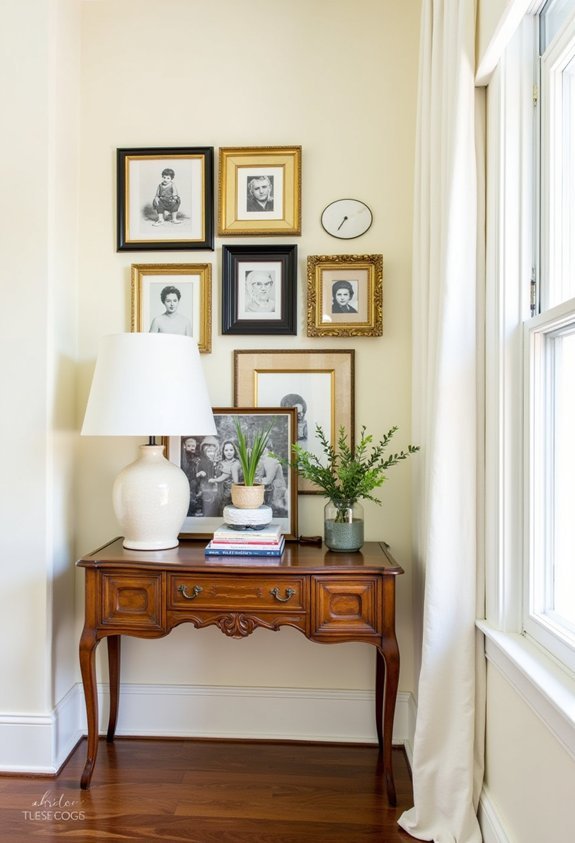
Picture frames act like jewelry for your walls, and thrift stores are where you’ll find the real heirloom pieces. Look for substantial weight, sharp corners, and vintage frame styles with unexpected proportions—narrow mats, oversized borders, slim metallic profiles.
Ignore the art; you’re investing in the frame’s bones: molding depth, joinery, patina. At home, use simple frame restoration techniques: touch up scratches with furniture marker, refresh dingy gilt with softly brushed-on gold wax, tighten loose backs with new hardware.
Slip in black-and-white photos or minimalist prints to contrast with ornate detailing. When you cluster frames, repeat one element—finish, color, or thickness—so the collection feels curated, not chaotic.
Your walls will whisper luxury, not shout it. Every glance becomes slower, more deliberate, like savoring a secret.
Velvet and Textured Throw Pillows
A single velvet or richly textured throw pillow from a thrift store can shift an entire room from “fine” to tactile and inviting.
Look for dense pile, saturated color, and invisible zippers; they photograph as luxury even when they cost a few dollars.
- Choose unexpected color combinations—ink blue with blush, olive with lilac, camel with merlot—to create visual tension that still feels soft and romantic.
- Mix fabrics using subtle layering techniques: velvet against nubby linen, boucle beside smooth cotton, always varying scale so each piece can breathe.
- Edit ruthlessly; two or three deliberate pillows on a sofa feel more intimate than a crowded lineup, inviting you to lean back, trace the seams, and stay a little longer in the quiet, curated glow tonight there.
Ceramic Vases and Pottery
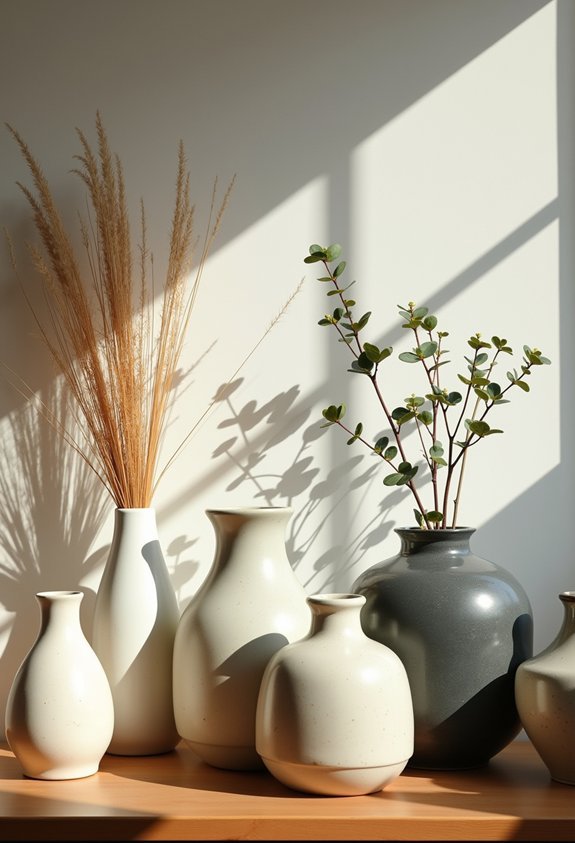
Clay becomes sculpture when you start treating thrifted ceramic vases and pottery as mini architecture for your shelves and tables.
Look for pieces with quiet, sculptural silhouettes—narrow necks, rounded bodies, softened edges—so even a $3 find feels gallery-worthy.
Study glazes closely: matte chalk whites, inky oxblood, and cool celadon echo current ceramic color trends without shouting for attention.
Turn each piece over; subtle rings, finger marks, or an uneven foot reveal hand-led pottery crafting techniques, which always read richer than factory-perfect.
Group three vessels in varied heights, keeping the palette tight and the shapes distinct.
Let one remain empty, one cradle a single branch, and one hold nothing but light and shadow.
Rotate them seasonally to keep your arrangements feeling deliberate, effortless, and alive.
Upholstered Accent Chairs
Two well-chosen upholstered accent chairs from a thrift store can anchor an entire room, adding shape, color, and texture in one move.
When you scan the aisles, look first at silhouette; strong accent chair styles read as custom, even if the fabric’s dated. You can always re-cover, but you can’t fix awkward proportions.
- Study the frame: run your hand along the arms and legs, checking for solid wood, tight joinery, and graceful lines.
- Inspect the seat: quality springs and vintage upholstery techniques create that deep, resilient sit that feels quietly luxurious.
- Consider the fabric: if it’s structurally sound, let a moody velvet, stripe, or small-scale floral whisper with your wall color and rug for a collected, high-end look that feels intimate and intentional always.
Woven Baskets and Storage Solutions

Why do woven baskets instantly make a room feel more considered and composed? You’re responding to texture, shadow, and the quiet geometry of basket weaving.
In thrift stores, look for sturdy handles, tight coils, and natural fibers—rattan, seagrass, wicker—without fraying or sagging. A matte, honeyed finish always looks more expensive than shiny varnish.
Use oversized floor baskets to collect throws in the living room or slippers in the entry, then tuck lidded ones under consoles for invisible storage organization.
In bathrooms, line smaller baskets on open shelving to corral hair tools, skincare, and spare towels. Keep shapes simple and palettes restrained; when every basket speaks the same language, your home feels edited, intentional, and luxuriously calm.
They quietly signal care, restraint, and lived-in luxury.
Hardcover Coffee Table Books
As your baskets quietly handle the clutter, hardcover coffee table books step in as the polished storytellers of your space. They suggest a life that’s curious, layered, and intentional, even when they cost only a few dollars.
When you’re browsing thrift shelves, lean in close and look for linen spines, embossed titles, and oversized formats that feel substantial in your hands.
For effortless coffee table styling, try:
- Stack three large books, then offset a candle or small bowl on top.
- Mix art, photography, and travel titles to hint at your inner world.
- Choose jackets in a restrained palette so the covers whisper, not shout.
Let your book collection tips revolve around desire, memory, and slow discovery, with every quiet page turned.
Mid-Century Modern Decor Pieces

Even in the most chaotic thrift aisle, mid-century modern decor pieces reveal themselves through clean lines, honest materials, and quietly confident silhouettes.
You’re hunting for mid century furniture with tapered legs, walnut veneers, and simple hardware—never fussy, always intentional. Run your hand along the edges; quality feels solid, not hollow. Look for low credenzas, surfboard coffee tables, and petite nightstands that float visually off the floor.
Pair them with vintage accents: a sculptural brass lamp, a starburst clock, or smoked-glass vases in amber or olive. Check that drawer joints are dovetailed and chair frames feel sturdy when you gently rock them.
Once home, give wood a soft oil treatment and let every piece breathe in negative space for a calm, curated, quietly luxurious room.
Fine China and Porcelain Dishes
That sleek credenza or surfboard coffee table you scored deserves more than random mugs—it deserves a curated stack of fine china and porcelain that feels intentional against the wood.
Elevate bare wood with a deliberate stack of feather-light china that whispers quiet luxury
When you scan thrift shelves, look for ultra-thin rims, crisp glazing, and subtle metallic edging; these details read quiet luxury, not grandma’s attic.
- Pair mismatched antique tea sets by color temperature—cool whites together, creamy ivories together—so the vignette feels collected, not chaotic.
- Treat shallow bowls as sculptural objects; lean them upright, layered, so pattern and negative space flirt.
- Use decorative serving platters as anchors on a console: one large oval, one smaller round, then a teacup or two nested inside for a soft, intimate still life that makes your whole space feel layered, sensual, finished.
Oversized Floor and Table Lamps

One oversized lamp can recalibrate an entire room, turning a thrift-store score into a deliberate focal point instead of background clutter.
When you scan the aisles, look for unique lamp styles with strong silhouettes: sculptural ceramic bases, angular brass columns, tripod woods.
Prioritize height and scale; a tall floor lamp beside a low sofa instantly feels custom. Ignore dingy shades—you can replace them—focus on weight, wiring, and proportion.
Test switches, check for wobble, then imagine the glow landing on your favorite chair. A single, dramatic piece gives you budget friendly lighting that reads bespoke, not bargain.
Place it where you want conversations to pause for a second and notice how intentional your home feels. Let its generous scale quietly whisper confidence into every corner.
Gilded and Wooden Frames for DIY Art
Although they’re often stacked haphazardly on thrift-store shelves, gilded and wooden frames might be the most powerful styling tools you can bring home for pennies. You’re not buying the dated prints; you’re buying structure, proportion, and character.
- Study the corners and profiles. Deep mouldings, crisp joins, and subtle gilded accents instantly read as custom, even if the art is a postcard or magazine tear-out.
- Mix warm wood with ornate gold. The contrast softens the shine, grounding vintage aesthetics so they feel curated, not costume-y.
- Swap the contents. Pressed botanicals, minimalist line drawings, or your own photographs turn these castoffs into a personal gallery wall.
Keep mats bright and margins generous; negative space makes everything look quietly expensive in the best way.
Decorative Trays and Bowls
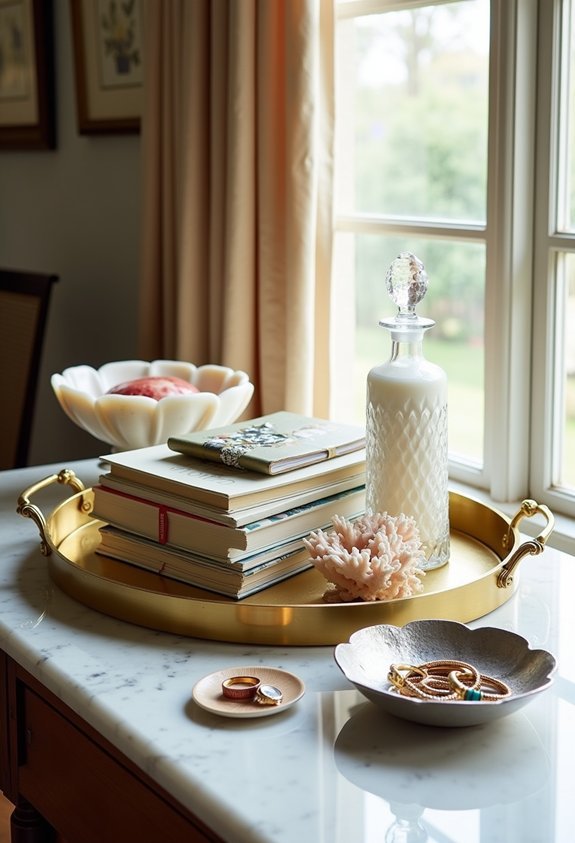
Once your walls feel considered, turn to the flat surfaces that quietly shape how you live day to day—this is where decorative trays and bowls earn their keep.
In thrift stores, scan low shelves for weighty pieces: vintage ceramics with a dense glaze, antique silver that’s softly tarnished, matte brass with a gentle patina. You’re looking for shallow, generous forms—ovals, low-rimmed circles, elongated rectangles—that corral daily chaos into something intentional.
Place one on your coffee table to gather remotes, a candle, a single sculptural object. Let a narrow tray dignify your nightstand: water glass, favorite book, perfume. On the entry console, a broad bowl quietly receives keys, receipts, and the day’s undone edges.
Rotate pieces seasonally so surfaces always feel edited, never stagnant inside.
Textured Blankets and Throws
When the furniture silhouettes feel settled, texture is what makes the room exhale—and thrifted blankets and throws are the quickest way to shift that atmosphere.
Start by running your fingers along each piece; you’re looking for weight, drape, and a hand-feel that invites lingering rather than scratching.
Let your fingertips decide—choose blankets with a fluid drape and a touch your skin lingers on
- Choose textured blanket styles in tonal layers—chunky knits, matelassé, or soft chenille in shades close to your sofa create a quiet, expensive mood.
- Contrast textures: lay a nubby wool across smooth leather, or a washed-linen throw over crisp cotton to keep the eye moving.
- Edit thoughtfully; one or two cozy throw ideas—folded at the foot of the bed or casually over an armchair—feel sensual, not cluttered, and quietly raise the room’s perceived luxury level.
Architectural Salvage and Hardware

Even in the humblest thrift store, the architectural odds and ends—old brass knobs, keyhole escutcheons, carved corbels, glass doorknobs, cast-iron hooks—are often the most quietly transformative pieces you can bring home.
Lift them from dusty bins and imagine them as jewelry for your rooms. Replace flimsy builder-grade pulls with weighty vintage hardware and you’ll feel the door announce itself every time it closes.
Mount a single, timeworn corbel under a shelf of salvaged wood and suddenly the whole vignette looks bespoke. Let patina guide you: hairline cracks in crystal, softened edges on brass, layers of paint ghosting along a keyplate.
These details whisper history, and in your hands, they become a kind of intimate architectural editing. Each small swap deepens your home’s visual richness.
Decorative Room Dividers and Screens
A folding screen in a thrift aisle is rarely just a castoff; it’s a ready-made piece of architecture you can lift and move at will. You’re not just buying privacy; you’re buying a backdrop that edits the room.
1. Look for vintage folding screens with real wood frames, brass hinges, and solid weight.
Even chipped lacquer or worn cane reads deliberate, like patina on a cherished heirloom.
Scuffs and frayed edges feel intentional, like the quiet history of a beloved heirloom
2. Consider artistic room dividers with linen, silk, or perforated metal panels.
They filter light, flattering skin tones and softening harsh corners.
3. Use a screen to define zones: tuck one behind a sofa, flank a bed, or conceal a clutter-prone corner.
Suddenly, the space feels curated, not cramped. It becomes quiet theater for your daily rituals.
Classic Clocks and Mantel Timepieces

Ticking quietly on a thrift store shelf, classic clocks and mantel timepieces offer both structure and atmosphere—portable architecture for your sense of time.
You’re not just buying function; you’re curating a small, sculptural presence that anchors a room. Look for vintage timepieces with beveled glass, brass feet, or inlaid wood that echo the lines of your furniture.
A dark marble mantel clock sharpens a pale stone fireplace; a porcelain case softens an angular bookcase. Choose decorative clocks with readable faces and subtle contrast—cream dials, Roman numerals, slim black hands.
When possible, listen: you want a steady, low tick, not a frantic one. Place the clock where its profile catches side light; let it mark your evenings with a quiet, confident, ceremonial sense of presence.
In case you were wondering
How Do I Negotiate Prices at Thrift Stores Without Seeming Rude or Disrespectful?
You softly ask if there’s flexibility on a piece you love, praising its lines first. You follow thrift store etiquette: smile, stay warm, accept no gracefully. Subtle price negotiation tips: note flaws, bundle items, offer.
What Are the Best Ways to Sanitize Thrifted Items From Fabrics to Hard Surfaces?
You rescue orphaned decor, then wonder what diseases they’ve survived; start with fabric sanitization using hot washes, steam, or bleach, and follow with meticulous hard surface cleaning: disinfect, rinse, dry, then style like a gallery.
How Can I Spot Bed Bugs or Pests on Upholstered Thrift Pieces Before Buying?
You gently press seams, lift cushions, and scan piping with your phone flashlight for dark specks, shed skins, or tiny moving dots—classic bed bug identification using intimate, meticulous pest inspection techniques before you’ll commit fully.
Is It Ethical to Resell High-Value Thrift Finds for Profit Online?
Yes, it’s often ethical resale when you honor thrift store ethics: disclose flaws, clean lovingly, photograph beautifully, price fairly, and maybe donate back, so your curated finds feel like elevated, shared, sustainable luxury together always.
How Do I Set a Realistic Monthly Budget Specifically for Thrift Décor Hunting?
Treat your budget like a moodboard: first track every décor impulse for a month, then cap monthly spending at a percentage of income, create a thrift store budgeting envelope, and prioritize pieces that elevate vignettes.
Conclusion
With every framed painting you rescue, every crystal glass you polish, every linen napkin you press, you quietly raise the bar of your home. You’re not just decorating; you’re curating, editing, refining. You blend patina with polish, texture with gloss, solid wood with soft textiles. As you scout each thrift aisle, you train your eye, trust your taste, and prove that true luxury isn’t bought new—it’s beautifully discovered again, thoughtfully, and entirely on your terms.


Can you be more specific about the content of your article? After reading it, I still have some doubts. Hope you can help me. https://accounts.binance.info/sl/register-person?ref=I3OM7SCZ
Can you be more specific about the content of your article? After reading it, I still have some doubts. Hope you can help me. https://www.binance.com/register?ref=IHJUI7TF
I don’t think the title of your article matches the content lol. Just kidding, mainly because I had some doubts after reading the article.
Your article helped me a lot, is there any more related content? Thanks!