Colored Pencils Under $20 That Artists Swear By
You can build a surprisingly capable colored pencil setup under $20 if you prioritize pigment load, core hardness, and blend performance over brand prestige. Sets like Crayola, Arteza, and Castle Arts often handle 70–80% of working artists’ sketching, layering, and shading needs, especially for studies and mixed-media journals. Medium-soft cores, clean color mixing, and clear barrel labeling matter more than huge color counts, and the most reliable budget picks share several specific traits worth knowing about next.
What you will leave with
- Look for medium-soft cores that lay down rich color easily, ideal for both beginners and serious sketching under a $20 budget.
- Choose sets of 24–36 colors to maximize versatility without paying for redundant hues you’ll rarely touch.
- Prioritize pencils with consistent pigmentation and clean blending, so artists can layer, shade, and burnish without muddy colors.
- Check barrel labeling and casing quality; durable wood and clear color names help repeat mixes and support faster, more confident workflow.
- Pair any budget set with a good sharpener and proper storage, extending pencil life and maintaining reliable performance that artists can depend on.
What Makes Budget Colored Pencils Worth Using

Although inexpensive sets can’t match the pigment load or lightfastness of professional lines, budget colored pencils are worth using when you prioritize cost-efficiency, learning, and experimentation over archival results.
You treat them as a low-risk lab for testing pressure, layering strategies, and burnishing without fearing wasted cash. That freedom invites bolder mark-making, quicker iterations, and more honest pencil comparisons with premium brands you already own.
Because cores are often harder, you naturally refine control, edge definition, and hatch direction to coax saturation from each stroke. For many artist preferences, that disciplined practice matters more than perfect color permanence.
Budget pencils also reveal which hues you actually exhaust, so you can later invest in open-stock professional replacements with surgical precision while minimizing regret and waste.
Key Features to Look For Under $20
Once you treat budget colored pencils as a testing ground rather than heirloom materials, it makes sense to judge each set by specific performance metrics instead of price alone.
First, evaluate core composition: wax-heavy leads lay down smoother blends but can bloom; oil-based cores stay sharper and layer more cleanly.
Compare color intensity by swatching light, medium, and fully burnished passes; weak saturation usually signals excess filler or inconsistent pigment milling.
Then test pencil hardness against your paper: harder cores preserve detail and tight hatching, while softer ones suit pressure blending and atmospheric gradients.
Finally, inspect casing quality—barrel centering, lacquering, and labeling—because a poorly centered core snaps, wastes pigment, and quietly disrupts your drawing rhythm.
Consistent performance lets you trust the line, and experiment.
Best Sets for Beginners and Casual Sketching

When you’re starting out or just sketching for fun, the best sub‑$20 colored pencil sets combine forgiving handling with enough technical range to expose real strengths and weaknesses.
For you, that usually means medium-soft cores that lay down color without demanding perfect pressure control, yet stay sharp enough for clean contours and small details.
Look for sets around 24–36 colors; anything larger becomes redundant at this stage and complicates basic value practice and beginner techniques.
You want moderately pigmented leads—strong enough to read clearly in a single pass, but not so saturated that every mark feels irreversible.
Also check barrel labeling and numbering; clear hue names make it easier to repeat mixes across quick studies and longer casual projects without losing your playful curiosity.
Top Picks for Blending, Layering, and Shading
Few budget art supplies reveal their true quality as clearly as colored pencils built for blending, layering, and shading.
When you push pigments into one another, cheap cores collapse or streak; good ones stay creamy, controllable, and precise. You’re looking for sets under $20 with dense pigmentation, consistent binders, and minimal wax bloom so your blending techniques and layering strategies feel deliberate, not desperate.
- Soft wax cores that melt together for velvety gradients on smooth bristol
- Slightly firmer leads that keep edges sharp while you stack translucent glazes
- Colors engineered to mix cleanly instead of turning muddy mid-layer
- High lightfastness ratings, even in budget lines, for long-term display
- Barrels labeled clearly so you can repeat complex shadow recipes
These traits separate toys from tools.
Standout Options for Mixed Media and Journaling

Two groups of colored pencils consistently outperform the rest in mixed media and journaling: sets that tolerate wet layers (markers, light washes, brush pens) without shredding paper, and sets that keep a fine enough point for cramped margins and tiny icons.
For the first group, you want moderately hard cores with a smooth binder; they resist swelling when you glaze over them, so your mixed media pages don’t buckle into useless ripples.
For tight journaling techniques, prioritize slim barrels, centered cores, and minimal wax bloom, so lines stay razor‑clean even in 3 mm headers.
Compare swatches: higher transparency lets underdrawings, dates, and grid lines show through, while slightly desaturated palettes keep your spreads legible instead of screaming for attention during long, daily planning sessions.
How to Get Professional Results From Cheap Pencils
Mixed‑media‑friendly sets and journaling workhorses help, but professional‑looking pages depend far more on how you use cheap pencils than on their price tag.
Start by testing pressure: light, repeated passes create smoother gradients than one aggressive stroke, even with scratchy cores. Compare dry layering with gentle burnishing; alternate them to mimic the density of pricier wax pencils. Practice deliberate color mixing, glazing complementary hues instead of grabbing a darker pencil.
Light layering, gentle burnishing, and glazed complements turn budget pencils into rich, believable color.
- Map values first in soft graphite, then veil with transparent layers.
- Cross‑hatch in opposing directions to fake richer pigment load.
- Reserve a colorless blender for final unifying passes.
- Use tiny circular strokes to avoid visible banding.
- Keep a swatch page tracking techniques improvement and reliable blends under varied lighting.
Care, Sharpening, and Storage Tips for Longer Life
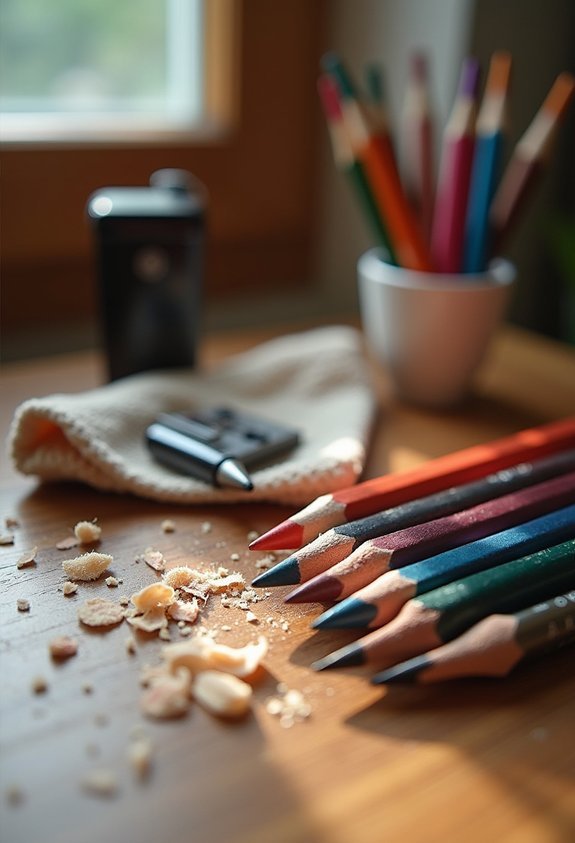
Proper care, sharpening, and storage turn a budget colored pencil set into a long‑term tool rather than a consumable. Treat pencil maintenance like you treat brush cleaning: systematic, not optional.
Use a hand crank or high‑quality handheld sharpener; cheap blades chew soft cores and waste pigment. Test sharpening techniques on your least‑used hues first, comparing point length and breakage. For blending work, keep a slightly blunter point; for line detail, rotate the pencil as you sharpen to center the core.
Wipe dust from barrels so grit doesn’t reenter the sharpener. Store pencils flat or core‑up in a case, never loose in a jar, and keep them away from heat that can weaken binders and warp wood.
This way, every pencil lasts longer between replacements.
In case you were wondering
Are Budget Colored Pencils Safe and Non-Toxic for Children and Pets?
You can’t assume budget colored pencils are safe; you must check ASTM D-4236 or EN71 certifications, confirm non toxic materials, avoid high-wax bargain sets, and treat child safety and pet exposure like you’d evaluate food-grade.
Do Inexpensive Colored Pencils Work Well on Black or Toned Paper?
They can work, but you’ll test the theory that cheap cores struggle on dark grounds. You’ll see weaker coverage, less vibrant pigments, and blending techniques compared with professional pencils designed for black or toned papers.
Can I Refill or Replace Single Colors From These Budget Sets?
You generally can’t replace single colors in these budget sets; manufacturers seldom offer true refill options, so color replacement means buying duplicate sets, unlike open-stock professional lines where you selectively restock your most abused hues.
How Do Cheap Colored Pencils Compare to Crayons and Markers for Adult Coloring Books?
When you test the theory that cheap pencils rival crayons and markers, you’ll see they blend smoother; pencil blending techniques allow subtler gradients, though, in a color vibrancy comparison, markers hit harder, crayons appear waxier.
Are There Eco-Friendly or Sustainably Sourced Colored Pencil Options Under $20?
Yes, you can find eco friendly brands under $20; you’ll compare options like Faber-Castell Grip EcoPencils and Crayola Colors of the World, which use sustainable materials, minimal packaging, and non-toxic pigments versus conventional budget sets.
Conclusion
By now, you can spot the sweet spot where price, pigment load, and binder quality just happen to intersect under $20. You’ll compare core hardness, lightfast ratings, and blending behavior the way others compare brands of paint. When you test these sets side by side, you won’t rely on luck—only performance. Coincidentally, the ‘cheap’ pencils that outlast overworked premiums will be the ones you reach for when results, not labels, really matter in daily sketching.