15-Minute Comfort Pasta That Feels Like a Fancy Restaurant
You can create restaurant-worthy pasta in just fifteen cozy minutes—really, you can. Start by salting your water generously, then pull those noodles out a minute early while they’re still tender with bite. The secret? Don’t drain completely—that starchy water becomes velvet magic when tossed with garlic-kissed olive oil and a whisper of parmesan. Transfer everything to your sauce, let it all marry together… and suddenly your kitchen feels like a candlelit trattoria. Below, you’ll discover exactly how.
Why This Pasta Recipe Works Every Time
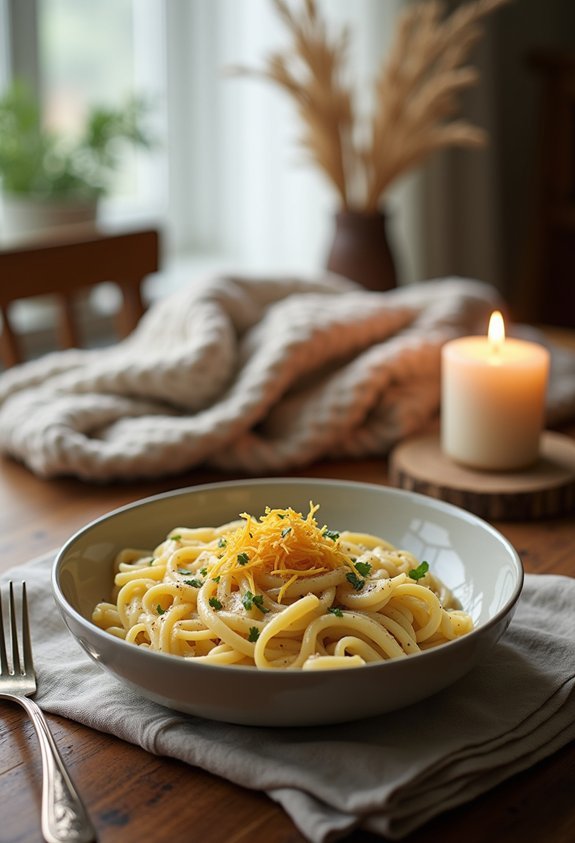
When the day feels a little too heavy and your shoulders carry that familiar ache, there’s something almost magical about a pot of pasta bubbling away on the stove.
You deserve this, you know? The way salted water transforms simple noodles into something with perfect pasta texture—tender yet with that gentle bite. It’s like the dish knows exactly what you need.
Sometimes the simplest dishes understand us best—salted water, tender noodles, and that perfect bite of comfort.
Here’s the secret… quick seasoning with just salt and cracked pepper rounds everything out beautifully. No fuss, no complicated steps.
The starchy pasta water? It becomes velvet in your sauce, binding everything into creamy comfort.
And isn’t that what we’re really after—something that wraps around you like a cozy blanket on a rainy evening? This recipe works because it was made for moments like yours.
Essential Pantry Ingredients You’ll Need
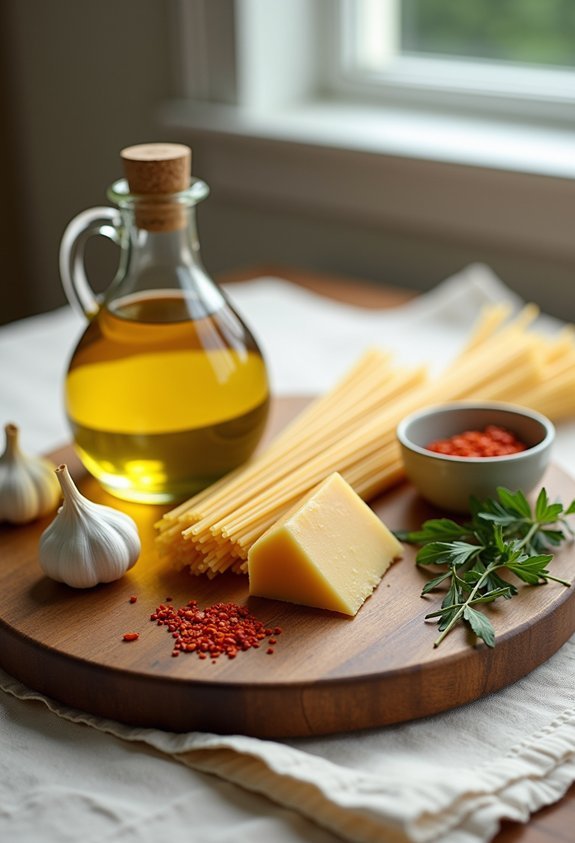
Before you even think about turning on the stove, let’s take a quiet peek into your pantry together—because the best comfort pasta doesn’t ask for much, just a handful of humble things waiting patiently on your shelves.
You’ll need good olive oil—the kind that smells like sunshine. Garlic, of course. A box of dried pasta, any shape you love. Kosher salt. Those red pepper flakes tucked in the back? Perfect. And parmesan, waiting to unfurl into velvet ribbons.
Your pantry staples do the heavy lifting here. Essential herbs—basil, thyme, maybe parsley—add that gentle brightness. A lemon, perhaps? Its zest whispers life into everything.
That’s it, really. Simple ingredients, cozy and familiar… already half the work is done.
Choosing the Right Pasta Shape for Maximum Flavor
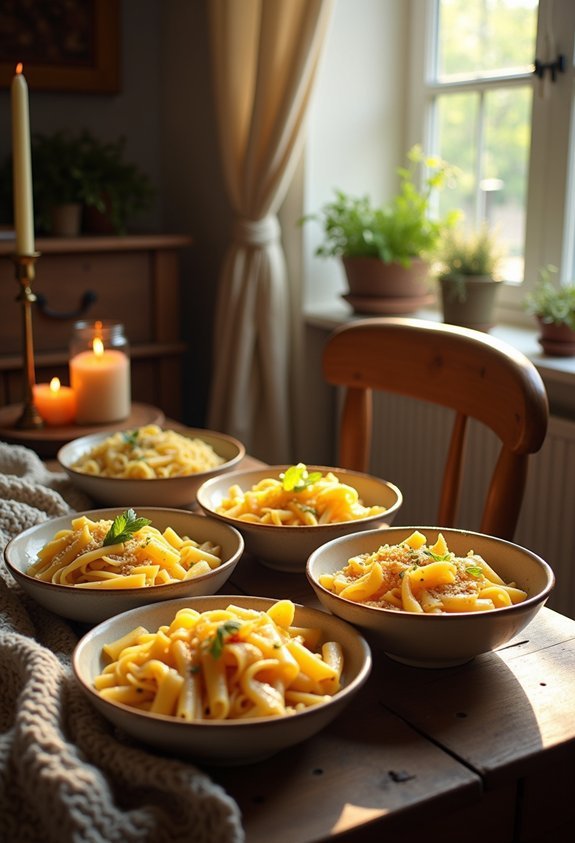
Though every shape tells its own little story, the one you reach for changes everything about how your sauce clings, pools, and settles into each bite.
Have you ever noticed how some bites feel… fuller? That’s your pasta shape working its quiet magic.
The right shape doesn’t just hold your sauce—it transforms how comfort lands on your tongue.
Consider these cozy companions for your sauce pairing journey:
- Rigatoni — those ridged tubes catch sauce like velvet pockets, letting flavor unfurl with each bite
- Fusilli — spirals that cradle chunky bits in their gentle curves
- Fettuccine — broad ribbons perfect for rich, creamy sauces to coat
- Orecchiette — “little ears” that cup spicy or cheesy sauces so tenderly
Your pasta shape isn’t just practical, dear one—it’s how comfort finds its way home to you.
The Secret to Restaurant-Quality Sauce in Minutes
Now that you’ve found your perfect pasta shape—your loyal companion in this cozy kitchen tale—let’s turn our attention to the sauce itself.
Here’s a little secret, whispered just for you: restaurant-quality sauce doesn’t need hours. It needs *care*. Start with San Marzano tomatoes—sweeter, gentler, like a velvet hug for your taste buds.
Sweat your garlic in olive oil until it softens… can you smell that warmth unfurling?
The magic lives in sauce consistency and flavor balance. A splash of pasta water helps everything come together, silky and whole. A pinch of sugar, perhaps? Just enough to soften any sharpness.
Stir gently. Taste often. Trust yourself—you’re doing beautifully.
This sauce? It’s already becoming something special, something yours.
Mastering the Pasta Water Technique
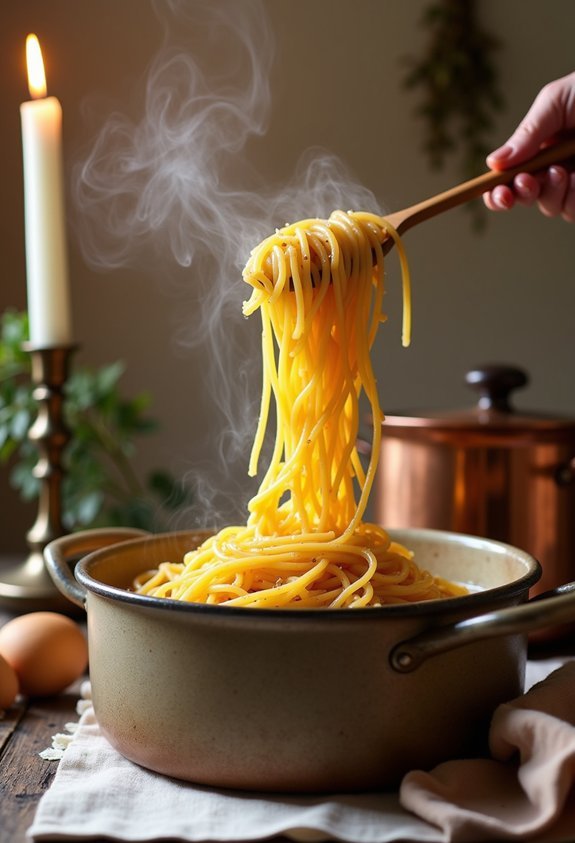
As your sauce simmers and those lovely tomato notes fill your kitchen, there’s one humble ingredient waiting to work its quiet magic—the very water your pasta swirls in.
That cloudy, golden pasta water holds released starch—a velvet secret that transforms thin sauces into something that clings and coats like a gentle embrace. The starch concentration matters, dear one. Use just enough water to cover your noodles, and you’ll create something richer.
Here’s how to capture that magic:
- Reserve a cup before draining—you’ll thank yourself later
- Scoop pasta directly into your sauce, bringing starchy droplets along
- Add pasta water slowly, letting it meld and thicken
- Skip the colander entirely… let the starch stay close
Doesn’t that feel like a cozy little kitchen secret?
Building Layers of Flavor Quickly
Before you add a single drop of cream or sprinkle of cheese, there’s a quiet ritual that makes all the difference—building your flavor base in shimmering oil.
Start with garlic and shallots, letting them soften until golden and sweet. Can you smell that? That’s home unfolding in your pan. A pinch of chili flakes blooms into fruity warmth… gentle, not harsh.
Here’s where quick techniques work their magic. Stir in tomato paste, letting it toast until it deepens to brick red.
Maybe add a tiny anchovy—it melts away, leaving only cozy, savory depth behind.
These layered flavors happen fast, perhaps three minutes, yet they create something velvet-rich and complex.
You’re not just cooking pasta, dear one. You’re weaving comfort into every golden, glistening spoonful.
Tips for Achieving Silky, Glossy Noodles
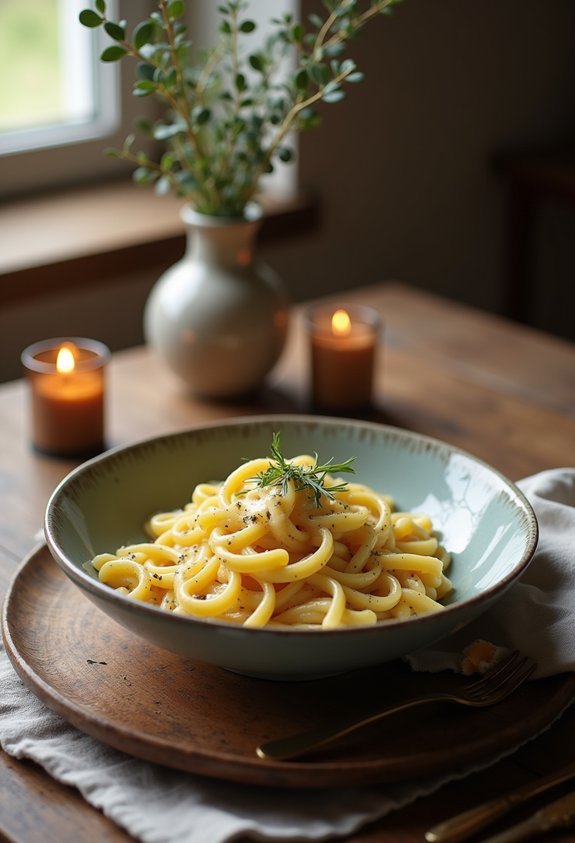
The secret to silk-ribboned, glistening noodles lives in the gentlest details.
Perfection hides in whispers—the small, tender moments where patience transforms simple strands into something extraordinary.
You’ll want to pull your pasta from the water a minute early—still tender, still yearning to finish its journey in that waiting sauce.
Don’t drain it completely dry, love. That starchy water clinging to each strand? It’s your quiet helper for perfect sauce emulsification.
Here’s what makes the magic unfurl:
- Reserve a cup of pasta water before draining—your golden ticket to glossy pasta texture
- Transfer noodles directly to sauce using tongs, keeping that precious starch intact
- Add pasta water gradually, watching everything become velvet
- Toss gently over medium heat, letting flavors marry
And if you’re adding eggs and cheese… take the pan off heat first. Trust this cozy little step.
Customizing Your Comfort Bowl With Add-Ins
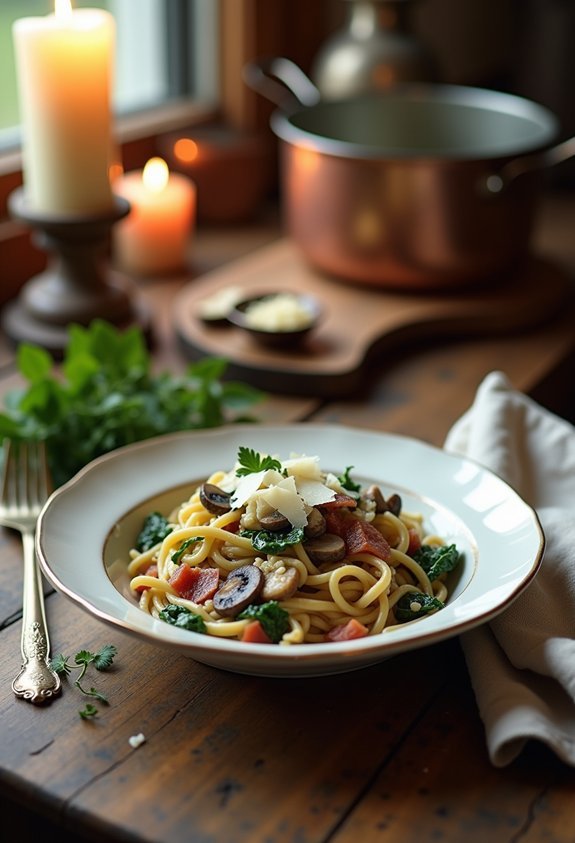
Once you’ve coaxed those noodles into silken perfection, the sweetest part begins—making your bowl truly yours.
What speaks to your heart tonight? Perhaps a scatter of toasted pine nuts for that gentle crunch… or ribbons of fresh basil unfurling their fragrance.
Your pasta toppings become love letters to yourself—crumbled sausage for warmth, sautéed mushrooms for earthy depth, a soft-boiled egg nestled like a golden treasure.
The flavor combinations are endless, really. A drizzle of garlic butter here, a whisper of chili flakes there.
Maybe you’ll add spinach because it makes you feel tended to—or maybe tonight calls for nothing but velvet Parmesan melting into every fold.
There’s no wrong answer, dear one. Only what feels cozy, nourishing, and undeniably yours.
Common Mistakes to Avoid When Making Quick Pasta
But even the most heartfelt bowl can stumble into little pitfalls—those small missteps that turn dreamy pasta into something… less than what you deserve.
Here’s what to watch for during your pasta cooking journey:
- Adding pasta before the water truly boils—patience, dear one. Wait for that rolling, dancing boil.
- Forgetting to salt properly—your water should taste like the sea, gently seasoning each strand.
- Overcooking until mushy—taste a minute early; al dente means tender with a whisper of bite.
- Draining every drop of starchy water—save some! It’s liquid velvet for sauce pairing.
And please… don’t rinse your pasta. That starchy coat helps sauce cling like a cozy embrace.
You’ve come this far—let these small kindnesses unfurl into something beautiful.
Serving Suggestions and Wine Pairings
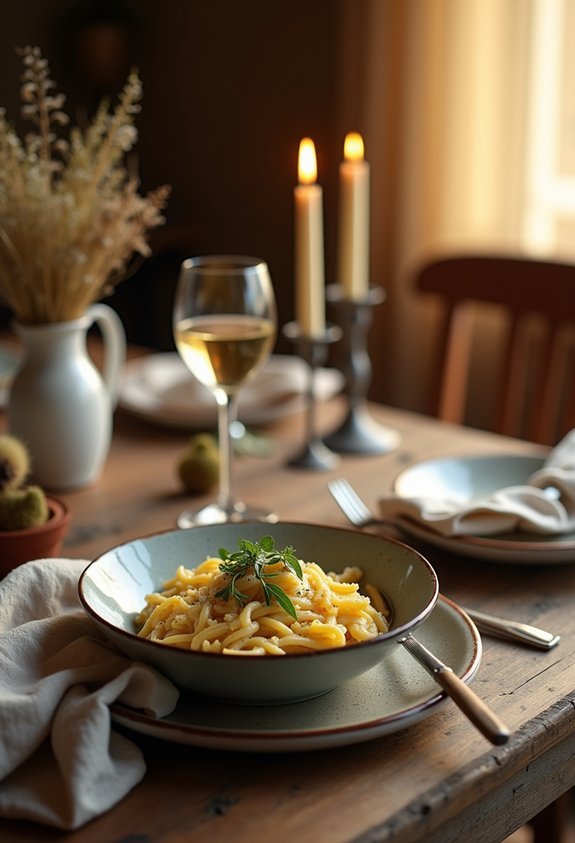
When your pasta rests warm in its bowl—steam curling upward like a whispered secret—you might wonder what gentle companions could make this moment even softer.
Simple pasta sauces deserve thoughtful wine types beside them. A creamy carbonara? Perhaps a Chianti, its gentle tannins cutting through richness like sunlight through lace curtains.
Pesto or olive oil preparations unfurl beautifully with crisp whites—something light, something that won’t overshadow those delicate herbs.
And the little touches… fresh crusty bread for dipping, a scatter of arugula dressed in lemon, maybe some marinated olives in a tiny dish.
You don’t need much, really. A drizzle of good olive oil. Cracked pepper. Aged parmesan snow-falling onto your plate.
This is your cozy moment—velvet and unhurried.
In case you were wondering
Can I Make This Pasta Recipe Gluten-Free With Alternative Noodles?
Yes, you can absolutely make this recipe gluten-free! Simply swap in gluten free noodles like rice, quinoa, or chickpea alternative pasta. You’ll love how creamy sauces embrace these noodles, creating that cozy comfort you’re craving.
How Do I Store Leftover Pasta to Reheat Without It Becoming Mushy?
You’ll want to master simple pasta preservation techniques: cool your noodles completely, toss with a touch of olive oil, and store in airtight containers. For reheating methods, use gentle stovetop warming or quick boiling-water dips.
Is This Recipe Suitable for Meal Prepping Throughout the Week?
Yes, it’s perfect for meal prep and weekly planning. You’ll cook once, store in airtight containers, and enjoy creamy comfort all week. Just reheat gently with a splash of broth to revive that luscious texture.
Can I Substitute Butter With Olive Oil for a Dairy-Free Version?
Yes, you can! Swapping butter for olive oil gives you wonderful dairy free options while adding olive oil benefits like heart-healthy fats. You’ll still get that silky, restaurant-quality finish you’re craving.
What’s the Best Way to Scale This Recipe for Larger Dinner Parties?
You’ll want to start by scaling ingredients proportionally—multiply everything by the same factor. When adjusting cooking times, use multiple pans rather than one crowded pot so your pasta cooks evenly and stays perfectly al dente.
Conclusion
So here you are—a warm bowl cradled in your hands, steam curling like a gentle secret. Did you know the average person eats pasta 200 times in their life? That’s 200 chances for this velvet comfort. Isn’t it lovely… how fifteen minutes can become something that feels like home? You did this. You made something beautiful. Now settle in, take that first twirl, and let the cozy unfurl.